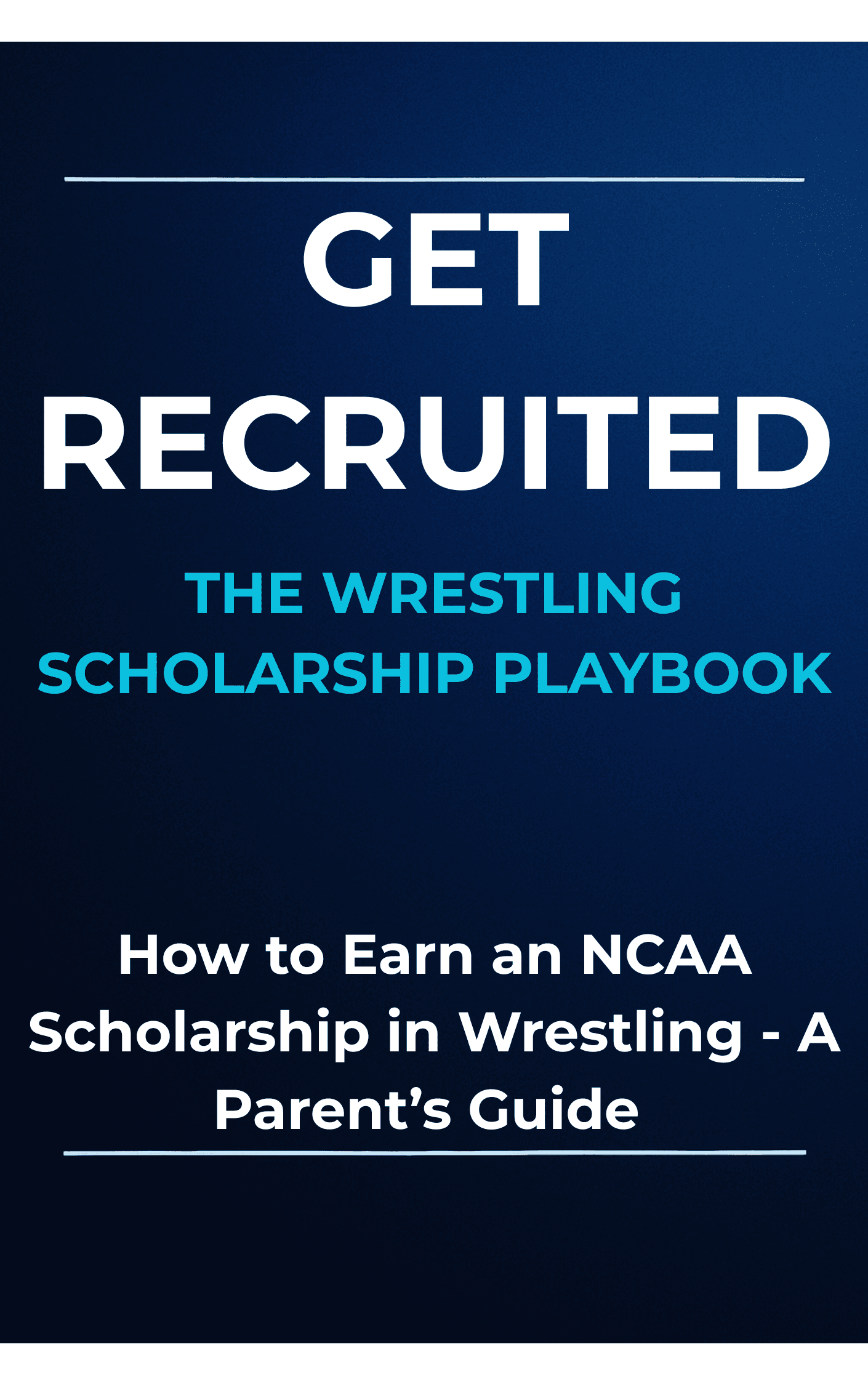
Get Recruited: The Wrestling Scholarship Playbook, guide on earning NCAA wrestling scholarships for parents.

Get Recruited - The Wrestling Scholarship Playbook (2026 Edition)

49

$39

A wrestling-specific recruiting system for families navigating today’s NCAA landscape. This playbook explains how college wrestling programs actually recruit — including scholarship structures, roster realities, evaluation timelines, and the decisions that determine real opportunities.

Inside the Wrestling Scholarship Playbook, you’ll learn how to:

  • Build a wrestling-specific recruiting timeline that reflects when coaches actually evaluate — not generic multi-sport advice.

  • Understand how college wrestling programs recruit across NCAA Divisions I, II, III, NAIA, and junior college, including roster sizes and scholarship realities.

  • Communicate with college coaches professionally, using outreach strategies that earn responses and avoid the quiet mistakes that end interest.

  • Present match footage and highlight videos coaches will actually watch, emphasizing technique, conditioning, and match awareness.

  • Approach official and unofficial visits with clarity, knowing what signals matter and how to evaluate real opportunity.

  • Understand how wrestling scholarships really work, including equivalency funding, partial awards, renewals, and stacking athletic, academic, and need-based aid.

  • Choose exposure events wisely, separating high-impact tournaments and camps from costly showcases that rarely influence recruiting outcomes.

  • Navigate NCAA academic eligibility and, when relevant, international requirements without losing recruiting leverage.

This guide is built to help families make better decisions earlier — and avoid mistakes that are difficult to undo later.

Details

Screenshots

Take Control of the Wrestling Recruiting Process

College wrestling recruiting is unforgiving.
Tight rosters. Limited scholarships. Short evaluation windows.

Many families lose opportunities not because their wrestler isn’t good enough — but because they miss key timing, communication, or leverage points. By the time they realize it, the window has already closed.

The Wrestling Scholarship Playbook exists to prevent that.

A Wrestling-Specific Recruiting System — Not Generic Advice

Most recruiting resources offer broad, multi-sport guidance that doesn’t reflect how wrestling programs actually operate.

This playbook is different.

It provides a wrestling-specific recruiting system that walks families through the entire process — from early high school planning to scholarship conversations and final decisions — with clarity about:

  • what coaches evaluate at each stage

  • when recruiting activity actually matters

  • where families most often lose leverage without realizing it

Instead of guessing, reacting, or following outdated advice, families learn how to make deliberate, well-timed decisions that keep doors open.

What This Playbook Helps You Do

Inside the Wrestling Scholarship Playbook, families learn how to:

  • Identify the right recruiting milestones by grade, so effort is focused where it actually influences outcomes.

  • Communicate with college wrestling coaches professionally, using outreach strategies that earn responses and avoid common mistakes that quietly eliminate recruits from boards.

  • Present match footage and highlight videos in ways coaches actually watch and evaluate — emphasizing technique, conditioning, and match awareness.

  • Understand how academics and eligibility affect recruiting leverage, including GPA, core courses, and Eligibility Center processes.

  • Navigate wrestling’s equivalency scholarship model, including partial awards, renewals, and stacking athletic, academic, and need-based aid.

  • Evaluate visits, exposure events, and program fit with clarity — beyond rankings or surface-level attention.

The result is not shortcuts or guarantees, but control — fewer surprises, fewer missteps, and better decisions earlier in the process.

Built for the Realities of College Wrestling

This guide reflects how wrestling recruiting actually works across:

  • NCAA Division I, II, and III

  • NAIA programs

  • Junior college pathways

It explains how roster construction, scholarship limits, and evaluation priorities differ — and how those differences shape real recruiting decisions.

Wrestling is an equivalency sport.
At the Division I level, programs can now award up to 30 scholarships across a 30-athlete roster, making every recruiting decision highly strategic and timing-dependent.

Families gain a clearer picture of where opportunities realistically exist — and how to pursue them intelligently.

Guidance for International Wrestlers and Families

For international athletes, recruiting adds additional layers of complexity.

The playbook includes dedicated guidance on:

  • transcript evaluation and translation

  • NCAA Eligibility Center certification

  • visa considerations and timelines

  • transitioning into U.S. college wrestling environments

This ensures international families can navigate recruiting without losing leverage to paperwork delays or procedural misunderstandings.
(See Chapter 13 for full details on visas, transcripts, and NCAA certification.)

What This Is — and What It Isn’t

This playbook does not promise scholarships, shortcuts, or guarantees.

It is a decision framework designed to help families:

  • understand the system earlier

  • act with better timing

  • avoid mistakes that are difficult to undo

For families serious about wrestling at the college level, it replaces guesswork with clarity — and reaction with strategy.

What’s Inside the Wrestling Scholarship Playbook

📅 Chapter 1: The Recruiting Timeline

A grade-by-grade roadmap tailored specifically to wrestling, outlining when recruiting activity actually matters — from early planning and skill development to coach contact, video updates, and visit timing aligned with NCAA rules.

🧠 Chapter 2: The College Wrestling Landscape

A clear explanation of how recruiting works across NCAA Divisions I, II, and III, as well as NAIA and junior college pathways, including differences in scholarship limits, roster construction, and evaluation priorities.

📞 Chapter 3: Contacting College Coaches

Guidance on communicating with coaches professionally and strategically, including how to initiate contact, follow up appropriately, and avoid common outreach mistakes that reduce recruiting interest.

🎥 Chapter 4: Match Footage & Highlight Videos

An in-depth look at how coaches evaluate wrestling video, what skills and situations matter most on film, and how to present matches in a way that reflects versatility, conditioning, and match awareness.

🧳 Chapter 5: Official & Unofficial Visits

How to prepare for and evaluate campus visits, including wrestling-specific considerations such as roster depth, injury management, scholarship renewal practices, academic support, and team culture.

📚 Chapter 6: Academics & NCAA Eligibility

A breakdown of NCAA academic requirements, core courses, GPA considerations, and Eligibility Center processes — and how academic readiness affects recruiting leverage and scholarship options.

💰 Chapter 7: Scholarships & Financial Strategy

An explanation of wrestling’s equivalency scholarship model, including partial awards, stacking athletic aid with academic and need-based assistance, and how to approach scholarship conversations professionally.

🌟 Chapter 8: Camps, Showcases & Exposure Events

How to evaluate high-impact wrestling events such as Fargo Nationals, NHSCA, Super 32, and other exposure opportunities — and how to avoid costly events that rarely influence recruiting outcomes.

🏫 Chapter 9: Finding the Right Program Fit

Tools for assessing colleges beyond rankings, including coaching philosophy, academic offerings, roster needs, geographic considerations, and long-term athlete development.

🔄 Chapter 10: Alternative Pathways & Plan B Options

A realistic look at junior college, prep and post-graduate years, walk-on routes, and transfer pathways — ensuring families understand viable options if the initial recruiting plan shifts.

📱 Chapter 11: Social Media & Online Visibility

Best practices for building a coach-friendly online presence, managing digital visibility, and supporting recruiting efforts without creating red flags.

💼 Chapter 12: NIL & Business Fundamentals

An overview of Name, Image, and Likeness considerations for wrestlers, including compliance basics, branding awareness, and realistic expectations.

🌍 Chapter 13: International Athlete Considerations

Practical guidance for international wrestlers covering transcript translation, NCAA certification, visa processes, and cultural adaptation to U.S. college athletics.
Details

Screenshots

Take Control of the Wrestling Recruiting Process

College wrestling recruiting is unforgiving.
Tight rosters. Limited scholarships. Short evaluation windows.

Many families lose opportunities not because their wrestler isn’t good enough — but because they miss key timing, communication, or leverage points. By the time they realize it, the window has already closed.

The Wrestling Scholarship Playbook exists to prevent that.

A Wrestling-Specific Recruiting System — Not Generic Advice

Most recruiting resources offer broad, multi-sport guidance that doesn’t reflect how wrestling programs actually operate.

This playbook is different.

It provides a wrestling-specific recruiting system that walks families through the entire process — from early high school planning to scholarship conversations and final decisions — with clarity about:

  • what coaches evaluate at each stage

  • when recruiting activity actually matters

  • where families most often lose leverage without realizing it

Instead of guessing, reacting, or following outdated advice, families learn how to make deliberate, well-timed decisions that keep doors open.

What This Playbook Helps You Do

Inside the Wrestling Scholarship Playbook, families learn how to:

  • Identify the right recruiting milestones by grade, so effort is focused where it actually influences outcomes.

  • Communicate with college wrestling coaches professionally, using outreach strategies that earn responses and avoid common mistakes that quietly eliminate recruits from boards.

  • Present match footage and highlight videos in ways coaches actually watch and evaluate — emphasizing technique, conditioning, and match awareness.

  • Understand how academics and eligibility affect recruiting leverage, including GPA, core courses, and Eligibility Center processes.

  • Navigate wrestling’s equivalency scholarship model, including partial awards, renewals, and stacking athletic, academic, and need-based aid.

  • Evaluate visits, exposure events, and program fit with clarity — beyond rankings or surface-level attention.

The result is not shortcuts or guarantees, but control — fewer surprises, fewer missteps, and better decisions earlier in the process.

Built for the Realities of College Wrestling

This guide reflects how wrestling recruiting actually works across:

  • NCAA Division I, II, and III

  • NAIA programs

  • Junior college pathways

It explains how roster construction, scholarship limits, and evaluation priorities differ — and how those differences shape real recruiting decisions.

Wrestling is an equivalency sport.
At the Division I level, programs can now award up to 30 scholarships across a 30-athlete roster, making every recruiting decision highly strategic and timing-dependent.

Families gain a clearer picture of where opportunities realistically exist — and how to pursue them intelligently.

Guidance for International Wrestlers and Families

For international athletes, recruiting adds additional layers of complexity.

The playbook includes dedicated guidance on:

  • transcript evaluation and translation

  • NCAA Eligibility Center certification

  • visa considerations and timelines

  • transitioning into U.S. college wrestling environments

This ensures international families can navigate recruiting without losing leverage to paperwork delays or procedural misunderstandings.
(See Chapter 13 for full details on visas, transcripts, and NCAA certification.)

What This Is — and What It Isn’t

This playbook does not promise scholarships, shortcuts, or guarantees.

It is a decision framework designed to help families:

  • understand the system earlier

  • act with better timing

  • avoid mistakes that are difficult to undo

For families serious about wrestling at the college level, it replaces guesswork with clarity — and reaction with strategy.

What’s Inside the Wrestling Scholarship Playbook

📅 Chapter 1: The Recruiting Timeline

A grade-by-grade roadmap tailored specifically to wrestling, outlining when recruiting activity actually matters — from early planning and skill development to coach contact, video updates, and visit timing aligned with NCAA rules.

🧠 Chapter 2: The College Wrestling Landscape

A clear explanation of how recruiting works across NCAA Divisions I, II, and III, as well as NAIA and junior college pathways, including differences in scholarship limits, roster construction, and evaluation priorities.

📞 Chapter 3: Contacting College Coaches

Guidance on communicating with coaches professionally and strategically, including how to initiate contact, follow up appropriately, and avoid common outreach mistakes that reduce recruiting interest.

🎥 Chapter 4: Match Footage & Highlight Videos

An in-depth look at how coaches evaluate wrestling video, what skills and situations matter most on film, and how to present matches in a way that reflects versatility, conditioning, and match awareness.

🧳 Chapter 5: Official & Unofficial Visits

How to prepare for and evaluate campus visits, including wrestling-specific considerations such as roster depth, injury management, scholarship renewal practices, academic support, and team culture.

📚 Chapter 6: Academics & NCAA Eligibility

A breakdown of NCAA academic requirements, core courses, GPA considerations, and Eligibility Center processes — and how academic readiness affects recruiting leverage and scholarship options.

💰 Chapter 7: Scholarships & Financial Strategy

An explanation of wrestling’s equivalency scholarship model, including partial awards, stacking athletic aid with academic and need-based assistance, and how to approach scholarship conversations professionally.

🌟 Chapter 8: Camps, Showcases & Exposure Events

How to evaluate high-impact wrestling events such as Fargo Nationals, NHSCA, Super 32, and other exposure opportunities — and how to avoid costly events that rarely influence recruiting outcomes.

🏫 Chapter 9: Finding the Right Program Fit

Tools for assessing colleges beyond rankings, including coaching philosophy, academic offerings, roster needs, geographic considerations, and long-term athlete development.

🔄 Chapter 10: Alternative Pathways & Plan B Options

A realistic look at junior college, prep and post-graduate years, walk-on routes, and transfer pathways — ensuring families understand viable options if the initial recruiting plan shifts.

📱 Chapter 11: Social Media & Online Visibility

Best practices for building a coach-friendly online presence, managing digital visibility, and supporting recruiting efforts without creating red flags.

💼 Chapter 12: NIL & Business Fundamentals

An overview of Name, Image, and Likeness considerations for wrestlers, including compliance basics, branding awareness, and realistic expectations.

🌍 Chapter 13: International Athlete Considerations

Practical guidance for international wrestlers covering transcript translation, NCAA certification, visa processes, and cultural adaptation to U.S. college athletics.
Details

Screenshots

Take Control of the Wrestling Recruiting Process

College wrestling recruiting is unforgiving.
Tight rosters. Limited scholarships. Short evaluation windows.

Many families lose opportunities not because their wrestler isn’t good enough — but because they miss key timing, communication, or leverage points. By the time they realize it, the window has already closed.

The Wrestling Scholarship Playbook exists to prevent that.

A Wrestling-Specific Recruiting System — Not Generic Advice

Most recruiting resources offer broad, multi-sport guidance that doesn’t reflect how wrestling programs actually operate.

This playbook is different.

It provides a wrestling-specific recruiting system that walks families through the entire process — from early high school planning to scholarship conversations and final decisions — with clarity about:

  • what coaches evaluate at each stage

  • when recruiting activity actually matters

  • where families most often lose leverage without realizing it

Instead of guessing, reacting, or following outdated advice, families learn how to make deliberate, well-timed decisions that keep doors open.

What This Playbook Helps You Do

Inside the Wrestling Scholarship Playbook, families learn how to:

  • Identify the right recruiting milestones by grade, so effort is focused where it actually influences outcomes.

  • Communicate with college wrestling coaches professionally, using outreach strategies that earn responses and avoid common mistakes that quietly eliminate recruits from boards.

  • Present match footage and highlight videos in ways coaches actually watch and evaluate — emphasizing technique, conditioning, and match awareness.

  • Understand how academics and eligibility affect recruiting leverage, including GPA, core courses, and Eligibility Center processes.

  • Navigate wrestling’s equivalency scholarship model, including partial awards, renewals, and stacking athletic, academic, and need-based aid.

  • Evaluate visits, exposure events, and program fit with clarity — beyond rankings or surface-level attention.

The result is not shortcuts or guarantees, but control — fewer surprises, fewer missteps, and better decisions earlier in the process.

Built for the Realities of College Wrestling

This guide reflects how wrestling recruiting actually works across:

  • NCAA Division I, II, and III

  • NAIA programs

  • Junior college pathways

It explains how roster construction, scholarship limits, and evaluation priorities differ — and how those differences shape real recruiting decisions.

Wrestling is an equivalency sport.
At the Division I level, programs can now award up to 30 scholarships across a 30-athlete roster, making every recruiting decision highly strategic and timing-dependent.

Families gain a clearer picture of where opportunities realistically exist — and how to pursue them intelligently.

Guidance for International Wrestlers and Families

For international athletes, recruiting adds additional layers of complexity.

The playbook includes dedicated guidance on:

  • transcript evaluation and translation

  • NCAA Eligibility Center certification

  • visa considerations and timelines

  • transitioning into U.S. college wrestling environments

This ensures international families can navigate recruiting without losing leverage to paperwork delays or procedural misunderstandings.
(See Chapter 13 for full details on visas, transcripts, and NCAA certification.)

What This Is — and What It Isn’t

This playbook does not promise scholarships, shortcuts, or guarantees.

It is a decision framework designed to help families:

  • understand the system earlier

  • act with better timing

  • avoid mistakes that are difficult to undo

For families serious about wrestling at the college level, it replaces guesswork with clarity — and reaction with strategy.

What’s Inside the Wrestling Scholarship Playbook

📅 Chapter 1: The Recruiting Timeline

A grade-by-grade roadmap tailored specifically to wrestling, outlining when recruiting activity actually matters — from early planning and skill development to coach contact, video updates, and visit timing aligned with NCAA rules.

🧠 Chapter 2: The College Wrestling Landscape

A clear explanation of how recruiting works across NCAA Divisions I, II, and III, as well as NAIA and junior college pathways, including differences in scholarship limits, roster construction, and evaluation priorities.

📞 Chapter 3: Contacting College Coaches

Guidance on communicating with coaches professionally and strategically, including how to initiate contact, follow up appropriately, and avoid common outreach mistakes that reduce recruiting interest.

🎥 Chapter 4: Match Footage & Highlight Videos

An in-depth look at how coaches evaluate wrestling video, what skills and situations matter most on film, and how to present matches in a way that reflects versatility, conditioning, and match awareness.

🧳 Chapter 5: Official & Unofficial Visits

How to prepare for and evaluate campus visits, including wrestling-specific considerations such as roster depth, injury management, scholarship renewal practices, academic support, and team culture.

📚 Chapter 6: Academics & NCAA Eligibility

A breakdown of NCAA academic requirements, core courses, GPA considerations, and Eligibility Center processes — and how academic readiness affects recruiting leverage and scholarship options.

💰 Chapter 7: Scholarships & Financial Strategy

An explanation of wrestling’s equivalency scholarship model, including partial awards, stacking athletic aid with academic and need-based assistance, and how to approach scholarship conversations professionally.

🌟 Chapter 8: Camps, Showcases & Exposure Events

How to evaluate high-impact wrestling events such as Fargo Nationals, NHSCA, Super 32, and other exposure opportunities — and how to avoid costly events that rarely influence recruiting outcomes.

🏫 Chapter 9: Finding the Right Program Fit

Tools for assessing colleges beyond rankings, including coaching philosophy, academic offerings, roster needs, geographic considerations, and long-term athlete development.

🔄 Chapter 10: Alternative Pathways & Plan B Options

A realistic look at junior college, prep and post-graduate years, walk-on routes, and transfer pathways — ensuring families understand viable options if the initial recruiting plan shifts.

📱 Chapter 11: Social Media & Online Visibility

Best practices for building a coach-friendly online presence, managing digital visibility, and supporting recruiting efforts without creating red flags.

💼 Chapter 12: NIL & Business Fundamentals

An overview of Name, Image, and Likeness considerations for wrestlers, including compliance basics, branding awareness, and realistic expectations.

🌍 Chapter 13: International Athlete Considerations

Practical guidance for international wrestlers covering transcript translation, NCAA certification, visa processes, and cultural adaptation to U.S. college athletics.
Stay Ahead of the Game — Join our Parent Insider List

Get expert tips, NCAA recruiting insights, and early access to new guides — straight to your inbox.

Your privacy is important to us. You'll only receive valuable content and updates from us.

Stay Ahead of the Game — Join our Parent Insider List

Get expert tips, NCAA recruiting insights, and early access to new guides — straight to your inbox.

Your privacy is important to us. You'll only receive valuable content and updates from us.

Stay Ahead of the Game — Join our Parent Insider List

Get expert tips, NCAA recruiting insights, and early access to new guides — straight to your inbox.

Your privacy is important to us. You'll only receive valuable content and updates from us.