Basketball-Womens
NCAA Women's Basketball Scholarships 2026–27: The Complete Guide for Parents & Athletes
Updated for the 2026-27 recruiting cycle. NCAA DI, DII & DIII. NAIA & NJCAA included.
Who This Guide Is For
If your daughter is chasing a college basketball scholarship, you're entering one of the fastest-growing and most competitive recruiting pipelines in collegiate athletics. Women's basketball has undergone a seismic shift in visibility over the past several years, driven by the Caitlin Clark and Angel Reese era and record tournament viewership, and the families who understand the system early have a real advantage over those who don't.
Whether your athlete is targeting a high-major DI program, a mid-major where she can start and develop, or a Division II or III school that offers a great education alongside competitive basketball, this guide walks you through how scholarships work, when recruiting starts, what coaches actually evaluate, and how to avoid the mistakes that derail recruiting conversations before they begin.
How Many NCAA Women's Basketball Scholarships Are Available in 2026-27?
Here's the one that surprises most families: unlike almost every other sport, women's basketball scholarships did not expand under the House v. NCAA settlement. Most sports saw their scholarship limits rise sharply once the NCAA replaced headcount limits with roster caps in 2025-26. Women's basketball stayed exactly where it was, 15 scholarships, 15-player roster. Men's basketball, by contrast, rose from 13 to 15 to match. Women's basketball is one of the few sports the settlement left untouched.
That doesn't make the scholarship any less real or any less valuable, a full D1 women's basketball scholarship remains one of the most complete packages in college athletics. It does mean families shouldn't walk into this process expecting a bigger pool of opportunities than existed two years ago. The competition for those 15 spots per roster is exactly as tight as it's always been.
Here's the scholarship maximum by division for the 2026-27 season:
Division | Women's Scholarships | Type | Key Note |
|---|---|---|---|
NCAA Division I | 15 | Equivalency | 15-player roster cap; unchanged by the House settlement; mix of full and partial awards |
NCAA Division II | 10 | Equivalency | Can be divided; commonly stacked with academic aid |
NCAA Division III | 0 | N/A | No athletic aid; strong academic packages available |
NAIA | 8 | Equivalency | Flexible stacking; significantly underrecruited |
NJCAA Division I | 15 | Equivalency, full tuition | Same as men's; 2-year path with a growing NCAA transfer pipeline |
NJCAA Division II | 15 | Tuition only, no partials | Covers tuition but not books, fees, or housing |
D3 programs can't offer athletic scholarships, but many are small private schools with substantial merit and need-based aid. Families who understand how to stack scholarships often find the net cost at a D3 school rivals or beats a partial D1 offer. It's worth understanding the full picture before ruling anything out.
⚠️ Key takeaway for parents: DI women's basketball scholarships stayed flat at 15 per roster while most other sports expanded. That means the DI path is exactly as competitive as it's always been, no more, no less. Whatever level your daughter ends up at, always ask directly: "Is this a scholarship offer, and what is the amount?" Don't assume interest equals money.
NCAA Women's Basketball Recruiting Timeline: Year-by-Year Breakdown
Women's basketball recruiting has accelerated dramatically. Elite DI programs are evaluating prospects as early as middle school, and the grassroots circuit, particularly Nike EYBL Girls and the Under Armour Association, is where most serious recruiting evaluations take place.
Grade 8 & Earlier — Elite Radar
Top-tier DI programs begin building watchlists at national grassroots events as early as Grade 7 and 8. This is not the norm for most athletes, but if your daughter is playing for a highly ranked EYBL or UA club, coaches are watching. Focus on fundamentals, coachability, and getting on a reputable grassroots program. Academics matter from day one, NCAA DI core course requirements begin in Grade 9.
Grade 9 — Build Your Foundation
Academics first: target a 3.0+ GPA. NCAA DI core course requirements begin counting this year. Join a competitive grassroots program, Nike EYBL Girls, Under Armour Association, adidas 3SSB Girls, or a well-regarded independent circuit. Start a private athletic tracker: stats, film, measurables. Attend skill camps and college team camps at programs you're targeting. Research programs at all levels, DI, DII, DIII, NAIA, and JUCO. Most families underestimate how strong DII and NAIA women's basketball has become.
Grade 10 — Positioning Year
Register with the NCAA Eligibility Center at eligibilitycenter.org. Do not wait. Begin soft outreach with a well-crafted introductory email and a highlight film link, sent from your daughter's own email account. Build a recruiting profile on platforms coaches actually use. June 15 after sophomore year: NCAA DI and DII coaches can begin direct contact, calls, texts, emails, verbal offers. This date is critical, be ready. The spring and summer grassroots season is your most important evaluation window of the entire process.
Grade 11 — The Critical Recruiting Window
Coaches can now email, call, text, and extend verbal offers. The July evaluation periods are the most coach-attended events of the year: Nike EYBL Girls, Under Armour Association, adidas 3SSB Girls, and major independent tournaments. Official visits can begin August 1 before junior year, with up to five official visits allowed before the end of junior year. Update your highlight film before the summer circuit begins, coaches want to see recent footage. Begin financial planning discussions, FAFSA opens October 1. Narrow your school list to 8-12 realistic targets across multiple divisions.
⚠️ Verbal offers are not binding. NCAA rules prohibit signed commitments until the signing period. A verbal offer can be withdrawn, especially if a coaching staff changes. Always keep your options open until a financial aid agreement is signed.
Grade 12 — Decision Year
Early signing period opens in mid-November, most DI commitments sign here. Take official visits (up to 5 at DI schools) before signing. Late signing period runs through mid-May for athletes who remain uncommitted. Respond promptly to scholarship offers, women's basketball rosters fill quickly at all levels. Finalize college applications and financial aid forms by each school's deadline. Note: exact signing period dates shift slightly year to year, confirm current dates with the NCAA Eligibility Center rather than building a calendar around last year's.
The Grassroots Trap: Exposure Doesn't Equal Recruiting Interest
Playing on a high-profile EYBL or UA team gets your athlete in front of coaches, but it doesn't guarantee anyone is actively recruiting her. Many families spend $5,000-$12,000+ per year on elite grassroots programs believing that proximity to big-name programs translates directly into offers.
What actually drives offers is performance at the right level, in front of the right coaches, with the right academic profile to back it up. A player lighting up a mid-level circuit with a 3.4 GPA and a clean, well-organized highlight film will often receive more legitimate recruiting attention than one riding the bench on an elite program.
The question to ask every season: is your daughter getting meaningful minutes and performing, or paying for proximity to a prestigious program name?
What Women's Basketball Coaches Actually Look For
Coaches at every level are building programs, not just rosters. Here's what moves athletes from a watchlist to an offer:
Position-specific skill: guards need ball-handling, shooting range, and the ability to run an offense. Wings and forwards need versatility, the ability to defend multiple positions and score from different areas. Post players need footwork and physicality.
Athleticism and measurables: height and lateral quickness matter, especially at DI. Coaches know your numbers. Make sure you do too, we built a full grade-by-grade breakdown of what height range coaches actually expect by position and division: see our [Basketball Height Benchmarks by Position and Grade] guide before you assume where your daughter fits.
Basketball IQ: decision-making in transition, off-ball movement, spacing awareness, and defensive positioning. Your highlight film should show all of this, not just scoring highlights.
Coachability: how your daughter responds to being corrected, subbed out, or challenged under pressure is observed at every camp and showcase. It matters more than most families realize.
Academic reliability: a player who becomes ineligible is a wasted scholarship. Coaches check transcripts early in the process, often before an official offer is made.
Character and culture fit: especially at mid-major and smaller programs, coaches recruit people they want in their program for four years. Team chemistry is a real factor.
💡 Tip for parents: let your daughter handle direct communication with coaches. A parent who calls, emails, or negotiates on her behalf signals immaturity and is a red flag for many programs, regardless of the level.
Academic Eligibility & NCAA Core Courses
To play at NCAA DI or DII level, your athlete must complete 16 NCAA core courses and meet minimum GPA thresholds:
4 years of English 3 years of Math (Algebra 1 or higher) 2 years of Natural/Physical Science (1 must be lab) 2 years of Social Science 1 additional year of English, Math, or Science 4 additional core courses (from above subjects or foreign language, religion, or philosophy)
Division | Min Core GPA | Sliding Scale? |
|---|---|---|
NCAA Division I | 2.3 | Yes (GPA/test score tradeoff) |
NCAA Division II | 2.2 | Yes |
NCAA Division III | No athletic eligibility standard | Varies by school |
⚠️ Basketball-specific warning: academic eligibility issues are more common in basketball recruiting than most families expect. Core course problems that develop in Grade 9 or 10 can quietly close DI doors by Grade 11, often without the family realizing it until offers stop coming. Start tracking core courses in Grade 9 and check annually with your school counselor.
For the full breakdown of core course requirements, visit the NCAA Eligibility Center.
How Women's Basketball Scholarships Actually Work
DI women's basketball remains a headcount-adjacent equivalency structure at 15 scholarships per 15-player roster, unchanged by the House settlement. Coaches can offer a mix of full and partial awards within that 15, but the total pool available per team hasn't grown the way it has in most other sports. Practically, this means the DI path is exactly as selective as it's ever been, and families should not assume more scholarship money is suddenly available at the top level.
At DII, NAIA, and NJCAA, scholarships are equivalency-based and can be divided and stacked. Smart families at these levels build a stacked package:
Athletic Aid, from the basketball program's scholarship budget Merit Scholarships, awarded for GPA and test scores, independent of athletics Need-Based Aid, from FAFSA and CSS Profile, file as early as possible Institutional Grants, many schools offer generous aid for out-of-state or out-of-region students External Scholarships, community, corporate, and sport-specific awards
💡 Tip: a DII or NAIA program stacking a partial athletic scholarship with merit and need-based aid can produce a total package that equals or exceeds a DI full ride, at a school where your daughter starts and develops, rather than sitting on a deep bench. Run the full financial comparison before dismissing smaller programs.
The Transfer Portal: What Women's Basketball Families Need to Know
This part of the landscape is moving fast, and some of it is genuinely unsettled right now. Here's what's confirmed and what isn't.
Confirmed: the transfer window has tightened. Basketball moved to a single 15-day transfer window that opens the day after the national championship game, plus a separate window that opens if a program changes head coaches. The old pattern of transfers trickling in across the fall and winter no longer applies.
Unsettled: how many times an athlete can transfer without being required to sit out a year is currently caught up in competing court rulings and a federal executive order. Depending on which framework ultimately holds, athletes may be free to transfer multiple times with no penalty, or may be limited to one penalty-free transfer before a sit-out year applies. Both versions have been reported as "the current rule" within the same season. Don't plan around either version as settled, check directly with the NCAA Eligibility Center or a compliance office for the current status before your daughter makes a transfer decision.
What this means for your family regardless of how the legal question resolves:
Coaches now recruit with one eye on the portal, meaning initial scholarship classes may be smaller in some years, with coaches intentionally leaving room for portal additions. Verbal commitments made early can be affected if a coach leaves between commitment and enrollment, coaching staff turnover in women's basketball has increased significantly. The JUCO route is increasingly legitimate for women's basketball, two years of college-level performance on film, academic cleanup, and a fresh recruiting cycle at a higher level.
⚠️ For committed athletes: if your daughter's head coach leaves before she enrolls, her scholarship offer may not carry over to the new staff. Have a contingency school list and maintain relationships with other programs throughout the process.
How to Create a Women's Basketball Recruiting Highlight Film That Gets Watched
Your highlight film is the first thing coaches watch, and the first reason they stop watching. A poorly edited or hard-to-read film ends recruiting conversations before they start.
Keep it 3 to 5 minutes. Put your best plays in the first 30 seconds, then follow with clips showing multiple skills. Text overlay on the opening screen: name, grad year, position, height, weight, GPA, club program, and NCAA Eligibility Center ID number. Show position-specific skills prominently: guards lead with ball-handling, shooting off screens, and playmaking; forwards lead with versatility, rebounding, and mid-range scoring. Include defensive clips. This is the most commonly overlooked section of women's basketball highlight films, and coaches notice when it's missing. Avoid slow-motion effects and heavy music edits. Coaches want to evaluate the play, not watch a music video. Host on YouTube or Hudl with a clean, searchable title.
Example title: 2027 G — Alyssa Chen — Nike EYBL Girls Chicago — 5'9" — 3.7 GPA — NCAA ID #1234567
For the full step-by-step approach, see our guide on how to create impact videos that NCAA coaches will actually watch.
How to Email Women's Basketball Coaches (and Actually Get a Response)
Cold emails to coaches have a low response rate, but the right email, sent at the right time, still opens doors at DII, DIII, NAIA, and JUCO programs that are actively searching. Before reaching out, read our guide on why college coaches don't respond to emails, the fix is almost always in the structure and personalization of the message itself.
Personalize every email. Reference the program specifically, a recent result, a player whose game you admire, or why the school fits academically and athletically. Lead with the film link and measurables, coaches scan quickly and decide in seconds whether to keep reading. Include GPA, position, height, grad year, club team, and upcoming tournament schedule. Keep it to 3 short paragraphs. No essays, no long introductions. Always email from your daughter's account, not a parent's. Coaches want to recruit the player. Follow up after strong tournament performances with a brief update and a timestamped clip of her best game.
For a proven template, see our guide on how to contact NCAA coaches for the first time.
Understanding NCAA Contact Rules for Women's Basketball
Knowing when coaches are allowed to contact your daughter, and when they aren't, prevents families from misreading a dead period of silence as loss of interest. Our full breakdown of NCAA recruiting contact rules covers all divisions in detail. Here's the women's basketball summary:
NCAA DI: coaches can begin direct contact, calls, texts, emails, on June 15 after sophomore year. Before that date, athletes can contact coaches first, and coaches can respond, but cannot initiate.
NCAA DII: contact is generally permitted any time, with fewer calendar restrictions than DI.
NCAA DIII and NAIA: no significant restrictions on contact timing. Coaches can reach out at any point.
Always verify the current year's recruiting calendar directly with the NCAA, dates and evaluation periods do shift, and women's basketball has specific July evaluation windows that are the most coach-attended events of the year.
What If My Daughter Doesn't Get a DI Offer?
DI women's basketball has roughly 350 programs. With scholarships flat at 15 per roster, the competition for meaningful spots is just as intense as it's always been. But a DI offer is not the only path to a great outcome, and for many athletes, it's not even the best one.
Division II: approximately 300 programs, real equivalency scholarships, strong competition, and often excellent academic environments. Many DII players transfer to DI through the portal after proving themselves.
Division III: 400+ programs, no athletic scholarships but often generous academic aid at small private schools where the financial package can be surprisingly strong.
NAIA: significantly underrecruited and undervalued. Flexible scholarships, competitive basketball, and a genuine path to a great education.
Junior college (NJCAA): two years to develop physically and academically, build a college-level highlight film, and re-enter the DI or DII market with a much stronger position than out of high school.
Prep school or post-grad year: an additional year of physical, academic, and basketball development that has launched many DI careers that weren't ready at 18.
💡 The mindset shift: the goal isn't a specific division, it's finding the best fit where your daughter develops, competes, earns her degree, and keeps future options open. Some of the best outcomes started at DII or NAIA.
NIL: What Women's Basketball Families Need to Know
Women's basketball has become one of the fastest-growing NIL sports at the college level, driven by the surge in visibility following the Caitlin Clark and Angel Reese era and record-breaking NCAA Tournament viewership. Deals range from local business partnerships at mid-major programs to six-figure brand agreements for high-major stars.
Athletes at every NCAA division can participate in NIL since 2021. Collective organizations at many DI programs now coordinate NIL packages for incoming recruits, this is increasingly a factor in high-major recruiting decisions. Women's basketball NIL has grown faster than almost any other college sport, and this trend is expected to continue. Build a personal brand and social following before arriving on campus. Consistent, clean, basketball-focused content puts an athlete in a stronger position for NIL deals from day one. NIL income is taxable. Keep records and consult a tax professional if deals become significant.
Quick-Reference Recruiting Checklist by Grade
Grade | Priority Actions |
|---|---|
9 | Register for core courses. Join a grassroots program. Start tracking film and stats. |
10 | Register with NCAA Eligibility Center. Begin soft outreach. Prepare highlight film. |
10 (Summer) | June 15: DI/DII coaches can initiate contact. Be ready. Grassroots season is critical. |
11 | Update film. Take unofficial visits. Official visits open August 1. Narrow school list. |
11 (Fall) | File FAFSA October 1. Evaluate offers carefully. Verbal offers are not binding. |
12 | Early signing period mid-November. Late signing through mid-May. Finalize financial aid. |
For the full year-by-year breakdown of what to prioritize at every stage, see our complete college recruiting timeline.
Further Reading
Basketball Height Benchmarks by Position and Grade: What Does Your Daughter Actually Need?
How to Create Impact Videos That NCAA Coaches Will Actually Watch
How to Stack Scholarships: Athletic, Academic, and Financial Aid
The Real College Recruiting Timeline: A Year-by-Year Roadmap
The Truth About NCAA Athletic Scholarships: How Much Do Athletes Really Get?
"The offer isn't the goal. Knowing your real value is."
Families who succeed in women's basketball recruiting treat it like a business process, not a lottery. They build early academic and athletic momentum, perform on the right circuits in front of the right coaches, and go in understanding exactly what a scholarship offer at each level is actually worth. Coaches recruit clarity. When your daughter shows readiness, resilience, and results, the scholarship conversation shifts from if to when.
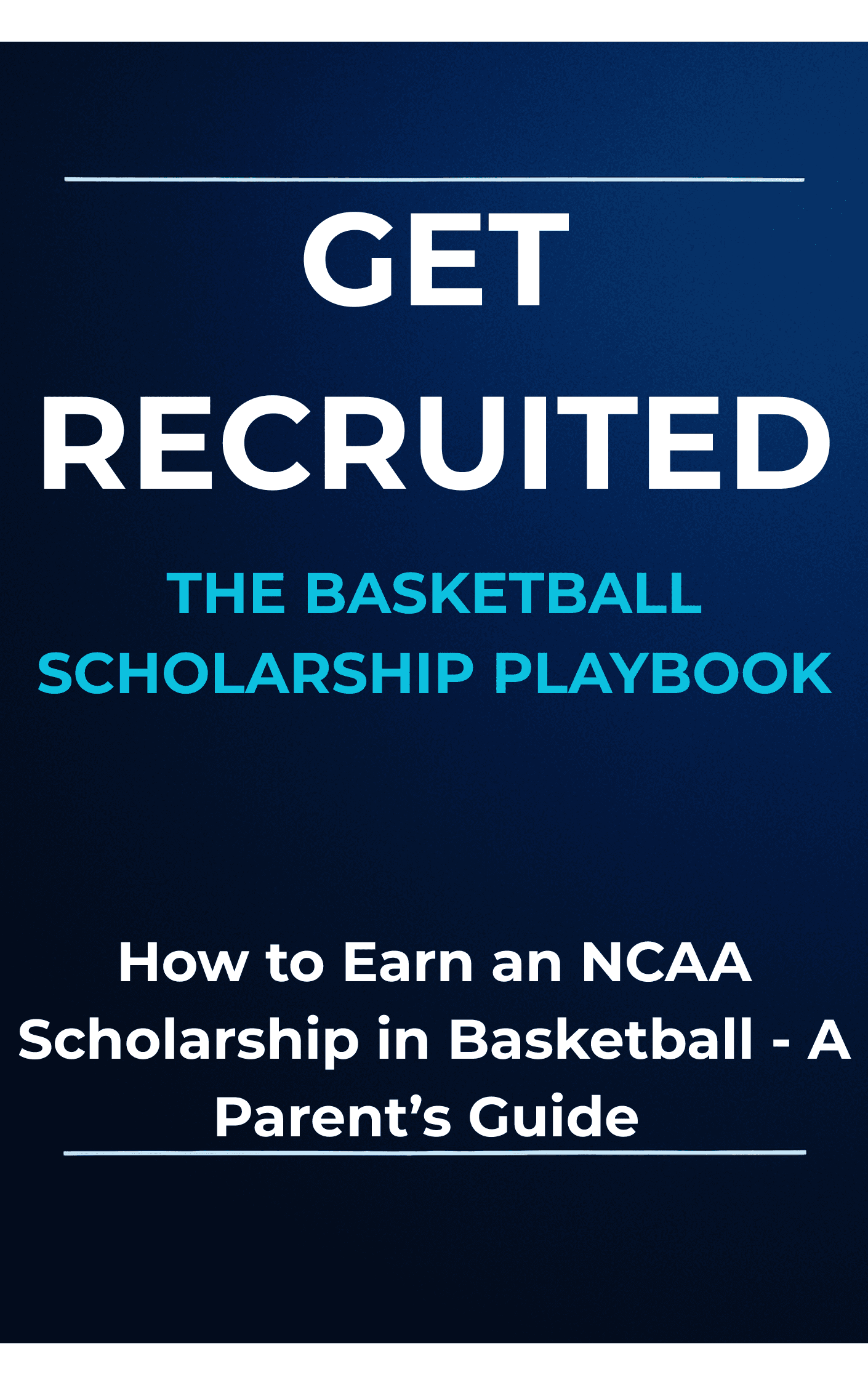
Ready to go deeper? The NCAA Basketball Scholarship Playbook gives you a complete recruiting checklist, coach email templates, a school-by-school spreadsheet framework, and a grade-by-grade timeline you can follow from Grade 9 through signing day. Everything in one place, built for families doing this without a recruiting consultant.
Basketball-Womens
NCAA Women's Basketball Scholarships 2026–27: The Complete Guide for Parents & Athletes
Updated for the 2026-27 recruiting cycle. NCAA DI, DII & DIII. NAIA & NJCAA included.
Who This Guide Is For
If your daughter is chasing a college basketball scholarship, you're entering one of the fastest-growing and most competitive recruiting pipelines in collegiate athletics. Women's basketball has undergone a seismic shift in visibility over the past several years, driven by the Caitlin Clark and Angel Reese era and record tournament viewership, and the families who understand the system early have a real advantage over those who don't.
Whether your athlete is targeting a high-major DI program, a mid-major where she can start and develop, or a Division II or III school that offers a great education alongside competitive basketball, this guide walks you through how scholarships work, when recruiting starts, what coaches actually evaluate, and how to avoid the mistakes that derail recruiting conversations before they begin.
How Many NCAA Women's Basketball Scholarships Are Available in 2026-27?
Here's the one that surprises most families: unlike almost every other sport, women's basketball scholarships did not expand under the House v. NCAA settlement. Most sports saw their scholarship limits rise sharply once the NCAA replaced headcount limits with roster caps in 2025-26. Women's basketball stayed exactly where it was, 15 scholarships, 15-player roster. Men's basketball, by contrast, rose from 13 to 15 to match. Women's basketball is one of the few sports the settlement left untouched.
That doesn't make the scholarship any less real or any less valuable, a full D1 women's basketball scholarship remains one of the most complete packages in college athletics. It does mean families shouldn't walk into this process expecting a bigger pool of opportunities than existed two years ago. The competition for those 15 spots per roster is exactly as tight as it's always been.
Here's the scholarship maximum by division for the 2026-27 season:
Division | Women's Scholarships | Type | Key Note |
|---|---|---|---|
NCAA Division I | 15 | Equivalency | 15-player roster cap; unchanged by the House settlement; mix of full and partial awards |
NCAA Division II | 10 | Equivalency | Can be divided; commonly stacked with academic aid |
NCAA Division III | 0 | N/A | No athletic aid; strong academic packages available |
NAIA | 8 | Equivalency | Flexible stacking; significantly underrecruited |
NJCAA Division I | 15 | Equivalency, full tuition | Same as men's; 2-year path with a growing NCAA transfer pipeline |
NJCAA Division II | 15 | Tuition only, no partials | Covers tuition but not books, fees, or housing |
D3 programs can't offer athletic scholarships, but many are small private schools with substantial merit and need-based aid. Families who understand how to stack scholarships often find the net cost at a D3 school rivals or beats a partial D1 offer. It's worth understanding the full picture before ruling anything out.
⚠️ Key takeaway for parents: DI women's basketball scholarships stayed flat at 15 per roster while most other sports expanded. That means the DI path is exactly as competitive as it's always been, no more, no less. Whatever level your daughter ends up at, always ask directly: "Is this a scholarship offer, and what is the amount?" Don't assume interest equals money.
NCAA Women's Basketball Recruiting Timeline: Year-by-Year Breakdown
Women's basketball recruiting has accelerated dramatically. Elite DI programs are evaluating prospects as early as middle school, and the grassroots circuit, particularly Nike EYBL Girls and the Under Armour Association, is where most serious recruiting evaluations take place.
Grade 8 & Earlier — Elite Radar
Top-tier DI programs begin building watchlists at national grassroots events as early as Grade 7 and 8. This is not the norm for most athletes, but if your daughter is playing for a highly ranked EYBL or UA club, coaches are watching. Focus on fundamentals, coachability, and getting on a reputable grassroots program. Academics matter from day one, NCAA DI core course requirements begin in Grade 9.
Grade 9 — Build Your Foundation
Academics first: target a 3.0+ GPA. NCAA DI core course requirements begin counting this year. Join a competitive grassroots program, Nike EYBL Girls, Under Armour Association, adidas 3SSB Girls, or a well-regarded independent circuit. Start a private athletic tracker: stats, film, measurables. Attend skill camps and college team camps at programs you're targeting. Research programs at all levels, DI, DII, DIII, NAIA, and JUCO. Most families underestimate how strong DII and NAIA women's basketball has become.
Grade 10 — Positioning Year
Register with the NCAA Eligibility Center at eligibilitycenter.org. Do not wait. Begin soft outreach with a well-crafted introductory email and a highlight film link, sent from your daughter's own email account. Build a recruiting profile on platforms coaches actually use. June 15 after sophomore year: NCAA DI and DII coaches can begin direct contact, calls, texts, emails, verbal offers. This date is critical, be ready. The spring and summer grassroots season is your most important evaluation window of the entire process.
Grade 11 — The Critical Recruiting Window
Coaches can now email, call, text, and extend verbal offers. The July evaluation periods are the most coach-attended events of the year: Nike EYBL Girls, Under Armour Association, adidas 3SSB Girls, and major independent tournaments. Official visits can begin August 1 before junior year, with up to five official visits allowed before the end of junior year. Update your highlight film before the summer circuit begins, coaches want to see recent footage. Begin financial planning discussions, FAFSA opens October 1. Narrow your school list to 8-12 realistic targets across multiple divisions.
⚠️ Verbal offers are not binding. NCAA rules prohibit signed commitments until the signing period. A verbal offer can be withdrawn, especially if a coaching staff changes. Always keep your options open until a financial aid agreement is signed.
Grade 12 — Decision Year
Early signing period opens in mid-November, most DI commitments sign here. Take official visits (up to 5 at DI schools) before signing. Late signing period runs through mid-May for athletes who remain uncommitted. Respond promptly to scholarship offers, women's basketball rosters fill quickly at all levels. Finalize college applications and financial aid forms by each school's deadline. Note: exact signing period dates shift slightly year to year, confirm current dates with the NCAA Eligibility Center rather than building a calendar around last year's.
The Grassroots Trap: Exposure Doesn't Equal Recruiting Interest
Playing on a high-profile EYBL or UA team gets your athlete in front of coaches, but it doesn't guarantee anyone is actively recruiting her. Many families spend $5,000-$12,000+ per year on elite grassroots programs believing that proximity to big-name programs translates directly into offers.
What actually drives offers is performance at the right level, in front of the right coaches, with the right academic profile to back it up. A player lighting up a mid-level circuit with a 3.4 GPA and a clean, well-organized highlight film will often receive more legitimate recruiting attention than one riding the bench on an elite program.
The question to ask every season: is your daughter getting meaningful minutes and performing, or paying for proximity to a prestigious program name?
What Women's Basketball Coaches Actually Look For
Coaches at every level are building programs, not just rosters. Here's what moves athletes from a watchlist to an offer:
Position-specific skill: guards need ball-handling, shooting range, and the ability to run an offense. Wings and forwards need versatility, the ability to defend multiple positions and score from different areas. Post players need footwork and physicality.
Athleticism and measurables: height and lateral quickness matter, especially at DI. Coaches know your numbers. Make sure you do too, we built a full grade-by-grade breakdown of what height range coaches actually expect by position and division: see our [Basketball Height Benchmarks by Position and Grade] guide before you assume where your daughter fits.
Basketball IQ: decision-making in transition, off-ball movement, spacing awareness, and defensive positioning. Your highlight film should show all of this, not just scoring highlights.
Coachability: how your daughter responds to being corrected, subbed out, or challenged under pressure is observed at every camp and showcase. It matters more than most families realize.
Academic reliability: a player who becomes ineligible is a wasted scholarship. Coaches check transcripts early in the process, often before an official offer is made.
Character and culture fit: especially at mid-major and smaller programs, coaches recruit people they want in their program for four years. Team chemistry is a real factor.
💡 Tip for parents: let your daughter handle direct communication with coaches. A parent who calls, emails, or negotiates on her behalf signals immaturity and is a red flag for many programs, regardless of the level.
Academic Eligibility & NCAA Core Courses
To play at NCAA DI or DII level, your athlete must complete 16 NCAA core courses and meet minimum GPA thresholds:
4 years of English 3 years of Math (Algebra 1 or higher) 2 years of Natural/Physical Science (1 must be lab) 2 years of Social Science 1 additional year of English, Math, or Science 4 additional core courses (from above subjects or foreign language, religion, or philosophy)
Division | Min Core GPA | Sliding Scale? |
|---|---|---|
NCAA Division I | 2.3 | Yes (GPA/test score tradeoff) |
NCAA Division II | 2.2 | Yes |
NCAA Division III | No athletic eligibility standard | Varies by school |
⚠️ Basketball-specific warning: academic eligibility issues are more common in basketball recruiting than most families expect. Core course problems that develop in Grade 9 or 10 can quietly close DI doors by Grade 11, often without the family realizing it until offers stop coming. Start tracking core courses in Grade 9 and check annually with your school counselor.
For the full breakdown of core course requirements, visit the NCAA Eligibility Center.
How Women's Basketball Scholarships Actually Work
DI women's basketball remains a headcount-adjacent equivalency structure at 15 scholarships per 15-player roster, unchanged by the House settlement. Coaches can offer a mix of full and partial awards within that 15, but the total pool available per team hasn't grown the way it has in most other sports. Practically, this means the DI path is exactly as selective as it's ever been, and families should not assume more scholarship money is suddenly available at the top level.
At DII, NAIA, and NJCAA, scholarships are equivalency-based and can be divided and stacked. Smart families at these levels build a stacked package:
Athletic Aid, from the basketball program's scholarship budget Merit Scholarships, awarded for GPA and test scores, independent of athletics Need-Based Aid, from FAFSA and CSS Profile, file as early as possible Institutional Grants, many schools offer generous aid for out-of-state or out-of-region students External Scholarships, community, corporate, and sport-specific awards
💡 Tip: a DII or NAIA program stacking a partial athletic scholarship with merit and need-based aid can produce a total package that equals or exceeds a DI full ride, at a school where your daughter starts and develops, rather than sitting on a deep bench. Run the full financial comparison before dismissing smaller programs.
The Transfer Portal: What Women's Basketball Families Need to Know
This part of the landscape is moving fast, and some of it is genuinely unsettled right now. Here's what's confirmed and what isn't.
Confirmed: the transfer window has tightened. Basketball moved to a single 15-day transfer window that opens the day after the national championship game, plus a separate window that opens if a program changes head coaches. The old pattern of transfers trickling in across the fall and winter no longer applies.
Unsettled: how many times an athlete can transfer without being required to sit out a year is currently caught up in competing court rulings and a federal executive order. Depending on which framework ultimately holds, athletes may be free to transfer multiple times with no penalty, or may be limited to one penalty-free transfer before a sit-out year applies. Both versions have been reported as "the current rule" within the same season. Don't plan around either version as settled, check directly with the NCAA Eligibility Center or a compliance office for the current status before your daughter makes a transfer decision.
What this means for your family regardless of how the legal question resolves:
Coaches now recruit with one eye on the portal, meaning initial scholarship classes may be smaller in some years, with coaches intentionally leaving room for portal additions. Verbal commitments made early can be affected if a coach leaves between commitment and enrollment, coaching staff turnover in women's basketball has increased significantly. The JUCO route is increasingly legitimate for women's basketball, two years of college-level performance on film, academic cleanup, and a fresh recruiting cycle at a higher level.
⚠️ For committed athletes: if your daughter's head coach leaves before she enrolls, her scholarship offer may not carry over to the new staff. Have a contingency school list and maintain relationships with other programs throughout the process.
How to Create a Women's Basketball Recruiting Highlight Film That Gets Watched
Your highlight film is the first thing coaches watch, and the first reason they stop watching. A poorly edited or hard-to-read film ends recruiting conversations before they start.
Keep it 3 to 5 minutes. Put your best plays in the first 30 seconds, then follow with clips showing multiple skills. Text overlay on the opening screen: name, grad year, position, height, weight, GPA, club program, and NCAA Eligibility Center ID number. Show position-specific skills prominently: guards lead with ball-handling, shooting off screens, and playmaking; forwards lead with versatility, rebounding, and mid-range scoring. Include defensive clips. This is the most commonly overlooked section of women's basketball highlight films, and coaches notice when it's missing. Avoid slow-motion effects and heavy music edits. Coaches want to evaluate the play, not watch a music video. Host on YouTube or Hudl with a clean, searchable title.
Example title: 2027 G — Alyssa Chen — Nike EYBL Girls Chicago — 5'9" — 3.7 GPA — NCAA ID #1234567
For the full step-by-step approach, see our guide on how to create impact videos that NCAA coaches will actually watch.
How to Email Women's Basketball Coaches (and Actually Get a Response)
Cold emails to coaches have a low response rate, but the right email, sent at the right time, still opens doors at DII, DIII, NAIA, and JUCO programs that are actively searching. Before reaching out, read our guide on why college coaches don't respond to emails, the fix is almost always in the structure and personalization of the message itself.
Personalize every email. Reference the program specifically, a recent result, a player whose game you admire, or why the school fits academically and athletically. Lead with the film link and measurables, coaches scan quickly and decide in seconds whether to keep reading. Include GPA, position, height, grad year, club team, and upcoming tournament schedule. Keep it to 3 short paragraphs. No essays, no long introductions. Always email from your daughter's account, not a parent's. Coaches want to recruit the player. Follow up after strong tournament performances with a brief update and a timestamped clip of her best game.
For a proven template, see our guide on how to contact NCAA coaches for the first time.
Understanding NCAA Contact Rules for Women's Basketball
Knowing when coaches are allowed to contact your daughter, and when they aren't, prevents families from misreading a dead period of silence as loss of interest. Our full breakdown of NCAA recruiting contact rules covers all divisions in detail. Here's the women's basketball summary:
NCAA DI: coaches can begin direct contact, calls, texts, emails, on June 15 after sophomore year. Before that date, athletes can contact coaches first, and coaches can respond, but cannot initiate.
NCAA DII: contact is generally permitted any time, with fewer calendar restrictions than DI.
NCAA DIII and NAIA: no significant restrictions on contact timing. Coaches can reach out at any point.
Always verify the current year's recruiting calendar directly with the NCAA, dates and evaluation periods do shift, and women's basketball has specific July evaluation windows that are the most coach-attended events of the year.
What If My Daughter Doesn't Get a DI Offer?
DI women's basketball has roughly 350 programs. With scholarships flat at 15 per roster, the competition for meaningful spots is just as intense as it's always been. But a DI offer is not the only path to a great outcome, and for many athletes, it's not even the best one.
Division II: approximately 300 programs, real equivalency scholarships, strong competition, and often excellent academic environments. Many DII players transfer to DI through the portal after proving themselves.
Division III: 400+ programs, no athletic scholarships but often generous academic aid at small private schools where the financial package can be surprisingly strong.
NAIA: significantly underrecruited and undervalued. Flexible scholarships, competitive basketball, and a genuine path to a great education.
Junior college (NJCAA): two years to develop physically and academically, build a college-level highlight film, and re-enter the DI or DII market with a much stronger position than out of high school.
Prep school or post-grad year: an additional year of physical, academic, and basketball development that has launched many DI careers that weren't ready at 18.
💡 The mindset shift: the goal isn't a specific division, it's finding the best fit where your daughter develops, competes, earns her degree, and keeps future options open. Some of the best outcomes started at DII or NAIA.
NIL: What Women's Basketball Families Need to Know
Women's basketball has become one of the fastest-growing NIL sports at the college level, driven by the surge in visibility following the Caitlin Clark and Angel Reese era and record-breaking NCAA Tournament viewership. Deals range from local business partnerships at mid-major programs to six-figure brand agreements for high-major stars.
Athletes at every NCAA division can participate in NIL since 2021. Collective organizations at many DI programs now coordinate NIL packages for incoming recruits, this is increasingly a factor in high-major recruiting decisions. Women's basketball NIL has grown faster than almost any other college sport, and this trend is expected to continue. Build a personal brand and social following before arriving on campus. Consistent, clean, basketball-focused content puts an athlete in a stronger position for NIL deals from day one. NIL income is taxable. Keep records and consult a tax professional if deals become significant.
Quick-Reference Recruiting Checklist by Grade
Grade | Priority Actions |
|---|---|
9 | Register for core courses. Join a grassroots program. Start tracking film and stats. |
10 | Register with NCAA Eligibility Center. Begin soft outreach. Prepare highlight film. |
10 (Summer) | June 15: DI/DII coaches can initiate contact. Be ready. Grassroots season is critical. |
11 | Update film. Take unofficial visits. Official visits open August 1. Narrow school list. |
11 (Fall) | File FAFSA October 1. Evaluate offers carefully. Verbal offers are not binding. |
12 | Early signing period mid-November. Late signing through mid-May. Finalize financial aid. |
For the full year-by-year breakdown of what to prioritize at every stage, see our complete college recruiting timeline.
Further Reading
Basketball Height Benchmarks by Position and Grade: What Does Your Daughter Actually Need?
How to Create Impact Videos That NCAA Coaches Will Actually Watch
How to Stack Scholarships: Athletic, Academic, and Financial Aid
The Real College Recruiting Timeline: A Year-by-Year Roadmap
The Truth About NCAA Athletic Scholarships: How Much Do Athletes Really Get?
"The offer isn't the goal. Knowing your real value is."
Families who succeed in women's basketball recruiting treat it like a business process, not a lottery. They build early academic and athletic momentum, perform on the right circuits in front of the right coaches, and go in understanding exactly what a scholarship offer at each level is actually worth. Coaches recruit clarity. When your daughter shows readiness, resilience, and results, the scholarship conversation shifts from if to when.
Ready to go deeper? The NCAA Basketball Scholarship Playbook gives you a complete recruiting checklist, coach email templates, a school-by-school spreadsheet framework, and a grade-by-grade timeline you can follow from Grade 9 through signing day. Everything in one place, built for families doing this without a recruiting consultant.
Basketball-Womens
NCAA Women's Basketball Scholarships 2026–27: The Complete Guide for Parents & Athletes
Updated for the 2026-27 recruiting cycle. NCAA DI, DII & DIII. NAIA & NJCAA included.
Who This Guide Is For
If your daughter is chasing a college basketball scholarship, you're entering one of the fastest-growing and most competitive recruiting pipelines in collegiate athletics. Women's basketball has undergone a seismic shift in visibility over the past several years, driven by the Caitlin Clark and Angel Reese era and record tournament viewership, and the families who understand the system early have a real advantage over those who don't.
Whether your athlete is targeting a high-major DI program, a mid-major where she can start and develop, or a Division II or III school that offers a great education alongside competitive basketball, this guide walks you through how scholarships work, when recruiting starts, what coaches actually evaluate, and how to avoid the mistakes that derail recruiting conversations before they begin.
How Many NCAA Women's Basketball Scholarships Are Available in 2026-27?
Here's the one that surprises most families: unlike almost every other sport, women's basketball scholarships did not expand under the House v. NCAA settlement. Most sports saw their scholarship limits rise sharply once the NCAA replaced headcount limits with roster caps in 2025-26. Women's basketball stayed exactly where it was, 15 scholarships, 15-player roster. Men's basketball, by contrast, rose from 13 to 15 to match. Women's basketball is one of the few sports the settlement left untouched.
That doesn't make the scholarship any less real or any less valuable, a full D1 women's basketball scholarship remains one of the most complete packages in college athletics. It does mean families shouldn't walk into this process expecting a bigger pool of opportunities than existed two years ago. The competition for those 15 spots per roster is exactly as tight as it's always been.
Here's the scholarship maximum by division for the 2026-27 season:
Division | Women's Scholarships | Type | Key Note |
|---|---|---|---|
NCAA Division I | 15 | Equivalency | 15-player roster cap; unchanged by the House settlement; mix of full and partial awards |
NCAA Division II | 10 | Equivalency | Can be divided; commonly stacked with academic aid |
NCAA Division III | 0 | N/A | No athletic aid; strong academic packages available |
NAIA | 8 | Equivalency | Flexible stacking; significantly underrecruited |
NJCAA Division I | 15 | Equivalency, full tuition | Same as men's; 2-year path with a growing NCAA transfer pipeline |
NJCAA Division II | 15 | Tuition only, no partials | Covers tuition but not books, fees, or housing |
D3 programs can't offer athletic scholarships, but many are small private schools with substantial merit and need-based aid. Families who understand how to stack scholarships often find the net cost at a D3 school rivals or beats a partial D1 offer. It's worth understanding the full picture before ruling anything out.
⚠️ Key takeaway for parents: DI women's basketball scholarships stayed flat at 15 per roster while most other sports expanded. That means the DI path is exactly as competitive as it's always been, no more, no less. Whatever level your daughter ends up at, always ask directly: "Is this a scholarship offer, and what is the amount?" Don't assume interest equals money.
NCAA Women's Basketball Recruiting Timeline: Year-by-Year Breakdown
Women's basketball recruiting has accelerated dramatically. Elite DI programs are evaluating prospects as early as middle school, and the grassroots circuit, particularly Nike EYBL Girls and the Under Armour Association, is where most serious recruiting evaluations take place.
Grade 8 & Earlier — Elite Radar
Top-tier DI programs begin building watchlists at national grassroots events as early as Grade 7 and 8. This is not the norm for most athletes, but if your daughter is playing for a highly ranked EYBL or UA club, coaches are watching. Focus on fundamentals, coachability, and getting on a reputable grassroots program. Academics matter from day one, NCAA DI core course requirements begin in Grade 9.
Grade 9 — Build Your Foundation
Academics first: target a 3.0+ GPA. NCAA DI core course requirements begin counting this year. Join a competitive grassroots program, Nike EYBL Girls, Under Armour Association, adidas 3SSB Girls, or a well-regarded independent circuit. Start a private athletic tracker: stats, film, measurables. Attend skill camps and college team camps at programs you're targeting. Research programs at all levels, DI, DII, DIII, NAIA, and JUCO. Most families underestimate how strong DII and NAIA women's basketball has become.
Grade 10 — Positioning Year
Register with the NCAA Eligibility Center at eligibilitycenter.org. Do not wait. Begin soft outreach with a well-crafted introductory email and a highlight film link, sent from your daughter's own email account. Build a recruiting profile on platforms coaches actually use. June 15 after sophomore year: NCAA DI and DII coaches can begin direct contact, calls, texts, emails, verbal offers. This date is critical, be ready. The spring and summer grassroots season is your most important evaluation window of the entire process.
Grade 11 — The Critical Recruiting Window
Coaches can now email, call, text, and extend verbal offers. The July evaluation periods are the most coach-attended events of the year: Nike EYBL Girls, Under Armour Association, adidas 3SSB Girls, and major independent tournaments. Official visits can begin August 1 before junior year, with up to five official visits allowed before the end of junior year. Update your highlight film before the summer circuit begins, coaches want to see recent footage. Begin financial planning discussions, FAFSA opens October 1. Narrow your school list to 8-12 realistic targets across multiple divisions.
⚠️ Verbal offers are not binding. NCAA rules prohibit signed commitments until the signing period. A verbal offer can be withdrawn, especially if a coaching staff changes. Always keep your options open until a financial aid agreement is signed.
Grade 12 — Decision Year
Early signing period opens in mid-November, most DI commitments sign here. Take official visits (up to 5 at DI schools) before signing. Late signing period runs through mid-May for athletes who remain uncommitted. Respond promptly to scholarship offers, women's basketball rosters fill quickly at all levels. Finalize college applications and financial aid forms by each school's deadline. Note: exact signing period dates shift slightly year to year, confirm current dates with the NCAA Eligibility Center rather than building a calendar around last year's.
The Grassroots Trap: Exposure Doesn't Equal Recruiting Interest
Playing on a high-profile EYBL or UA team gets your athlete in front of coaches, but it doesn't guarantee anyone is actively recruiting her. Many families spend $5,000-$12,000+ per year on elite grassroots programs believing that proximity to big-name programs translates directly into offers.
What actually drives offers is performance at the right level, in front of the right coaches, with the right academic profile to back it up. A player lighting up a mid-level circuit with a 3.4 GPA and a clean, well-organized highlight film will often receive more legitimate recruiting attention than one riding the bench on an elite program.
The question to ask every season: is your daughter getting meaningful minutes and performing, or paying for proximity to a prestigious program name?
What Women's Basketball Coaches Actually Look For
Coaches at every level are building programs, not just rosters. Here's what moves athletes from a watchlist to an offer:
Position-specific skill: guards need ball-handling, shooting range, and the ability to run an offense. Wings and forwards need versatility, the ability to defend multiple positions and score from different areas. Post players need footwork and physicality.
Athleticism and measurables: height and lateral quickness matter, especially at DI. Coaches know your numbers. Make sure you do too, we built a full grade-by-grade breakdown of what height range coaches actually expect by position and division: see our [Basketball Height Benchmarks by Position and Grade] guide before you assume where your daughter fits.
Basketball IQ: decision-making in transition, off-ball movement, spacing awareness, and defensive positioning. Your highlight film should show all of this, not just scoring highlights.
Coachability: how your daughter responds to being corrected, subbed out, or challenged under pressure is observed at every camp and showcase. It matters more than most families realize.
Academic reliability: a player who becomes ineligible is a wasted scholarship. Coaches check transcripts early in the process, often before an official offer is made.
Character and culture fit: especially at mid-major and smaller programs, coaches recruit people they want in their program for four years. Team chemistry is a real factor.
💡 Tip for parents: let your daughter handle direct communication with coaches. A parent who calls, emails, or negotiates on her behalf signals immaturity and is a red flag for many programs, regardless of the level.
Academic Eligibility & NCAA Core Courses
To play at NCAA DI or DII level, your athlete must complete 16 NCAA core courses and meet minimum GPA thresholds:
4 years of English 3 years of Math (Algebra 1 or higher) 2 years of Natural/Physical Science (1 must be lab) 2 years of Social Science 1 additional year of English, Math, or Science 4 additional core courses (from above subjects or foreign language, religion, or philosophy)
Division | Min Core GPA | Sliding Scale? |
|---|---|---|
NCAA Division I | 2.3 | Yes (GPA/test score tradeoff) |
NCAA Division II | 2.2 | Yes |
NCAA Division III | No athletic eligibility standard | Varies by school |
⚠️ Basketball-specific warning: academic eligibility issues are more common in basketball recruiting than most families expect. Core course problems that develop in Grade 9 or 10 can quietly close DI doors by Grade 11, often without the family realizing it until offers stop coming. Start tracking core courses in Grade 9 and check annually with your school counselor.
For the full breakdown of core course requirements, visit the NCAA Eligibility Center.
How Women's Basketball Scholarships Actually Work
DI women's basketball remains a headcount-adjacent equivalency structure at 15 scholarships per 15-player roster, unchanged by the House settlement. Coaches can offer a mix of full and partial awards within that 15, but the total pool available per team hasn't grown the way it has in most other sports. Practically, this means the DI path is exactly as selective as it's ever been, and families should not assume more scholarship money is suddenly available at the top level.
At DII, NAIA, and NJCAA, scholarships are equivalency-based and can be divided and stacked. Smart families at these levels build a stacked package:
Athletic Aid, from the basketball program's scholarship budget Merit Scholarships, awarded for GPA and test scores, independent of athletics Need-Based Aid, from FAFSA and CSS Profile, file as early as possible Institutional Grants, many schools offer generous aid for out-of-state or out-of-region students External Scholarships, community, corporate, and sport-specific awards
💡 Tip: a DII or NAIA program stacking a partial athletic scholarship with merit and need-based aid can produce a total package that equals or exceeds a DI full ride, at a school where your daughter starts and develops, rather than sitting on a deep bench. Run the full financial comparison before dismissing smaller programs.
The Transfer Portal: What Women's Basketball Families Need to Know
This part of the landscape is moving fast, and some of it is genuinely unsettled right now. Here's what's confirmed and what isn't.
Confirmed: the transfer window has tightened. Basketball moved to a single 15-day transfer window that opens the day after the national championship game, plus a separate window that opens if a program changes head coaches. The old pattern of transfers trickling in across the fall and winter no longer applies.
Unsettled: how many times an athlete can transfer without being required to sit out a year is currently caught up in competing court rulings and a federal executive order. Depending on which framework ultimately holds, athletes may be free to transfer multiple times with no penalty, or may be limited to one penalty-free transfer before a sit-out year applies. Both versions have been reported as "the current rule" within the same season. Don't plan around either version as settled, check directly with the NCAA Eligibility Center or a compliance office for the current status before your daughter makes a transfer decision.
What this means for your family regardless of how the legal question resolves:
Coaches now recruit with one eye on the portal, meaning initial scholarship classes may be smaller in some years, with coaches intentionally leaving room for portal additions. Verbal commitments made early can be affected if a coach leaves between commitment and enrollment, coaching staff turnover in women's basketball has increased significantly. The JUCO route is increasingly legitimate for women's basketball, two years of college-level performance on film, academic cleanup, and a fresh recruiting cycle at a higher level.
⚠️ For committed athletes: if your daughter's head coach leaves before she enrolls, her scholarship offer may not carry over to the new staff. Have a contingency school list and maintain relationships with other programs throughout the process.
How to Create a Women's Basketball Recruiting Highlight Film That Gets Watched
Your highlight film is the first thing coaches watch, and the first reason they stop watching. A poorly edited or hard-to-read film ends recruiting conversations before they start.
Keep it 3 to 5 minutes. Put your best plays in the first 30 seconds, then follow with clips showing multiple skills. Text overlay on the opening screen: name, grad year, position, height, weight, GPA, club program, and NCAA Eligibility Center ID number. Show position-specific skills prominently: guards lead with ball-handling, shooting off screens, and playmaking; forwards lead with versatility, rebounding, and mid-range scoring. Include defensive clips. This is the most commonly overlooked section of women's basketball highlight films, and coaches notice when it's missing. Avoid slow-motion effects and heavy music edits. Coaches want to evaluate the play, not watch a music video. Host on YouTube or Hudl with a clean, searchable title.
Example title: 2027 G — Alyssa Chen — Nike EYBL Girls Chicago — 5'9" — 3.7 GPA — NCAA ID #1234567
For the full step-by-step approach, see our guide on how to create impact videos that NCAA coaches will actually watch.
How to Email Women's Basketball Coaches (and Actually Get a Response)
Cold emails to coaches have a low response rate, but the right email, sent at the right time, still opens doors at DII, DIII, NAIA, and JUCO programs that are actively searching. Before reaching out, read our guide on why college coaches don't respond to emails, the fix is almost always in the structure and personalization of the message itself.
Personalize every email. Reference the program specifically, a recent result, a player whose game you admire, or why the school fits academically and athletically. Lead with the film link and measurables, coaches scan quickly and decide in seconds whether to keep reading. Include GPA, position, height, grad year, club team, and upcoming tournament schedule. Keep it to 3 short paragraphs. No essays, no long introductions. Always email from your daughter's account, not a parent's. Coaches want to recruit the player. Follow up after strong tournament performances with a brief update and a timestamped clip of her best game.
For a proven template, see our guide on how to contact NCAA coaches for the first time.
Understanding NCAA Contact Rules for Women's Basketball
Knowing when coaches are allowed to contact your daughter, and when they aren't, prevents families from misreading a dead period of silence as loss of interest. Our full breakdown of NCAA recruiting contact rules covers all divisions in detail. Here's the women's basketball summary:
NCAA DI: coaches can begin direct contact, calls, texts, emails, on June 15 after sophomore year. Before that date, athletes can contact coaches first, and coaches can respond, but cannot initiate.
NCAA DII: contact is generally permitted any time, with fewer calendar restrictions than DI.
NCAA DIII and NAIA: no significant restrictions on contact timing. Coaches can reach out at any point.
Always verify the current year's recruiting calendar directly with the NCAA, dates and evaluation periods do shift, and women's basketball has specific July evaluation windows that are the most coach-attended events of the year.
What If My Daughter Doesn't Get a DI Offer?
DI women's basketball has roughly 350 programs. With scholarships flat at 15 per roster, the competition for meaningful spots is just as intense as it's always been. But a DI offer is not the only path to a great outcome, and for many athletes, it's not even the best one.
Division II: approximately 300 programs, real equivalency scholarships, strong competition, and often excellent academic environments. Many DII players transfer to DI through the portal after proving themselves.
Division III: 400+ programs, no athletic scholarships but often generous academic aid at small private schools where the financial package can be surprisingly strong.
NAIA: significantly underrecruited and undervalued. Flexible scholarships, competitive basketball, and a genuine path to a great education.
Junior college (NJCAA): two years to develop physically and academically, build a college-level highlight film, and re-enter the DI or DII market with a much stronger position than out of high school.
Prep school or post-grad year: an additional year of physical, academic, and basketball development that has launched many DI careers that weren't ready at 18.
💡 The mindset shift: the goal isn't a specific division, it's finding the best fit where your daughter develops, competes, earns her degree, and keeps future options open. Some of the best outcomes started at DII or NAIA.
NIL: What Women's Basketball Families Need to Know
Women's basketball has become one of the fastest-growing NIL sports at the college level, driven by the surge in visibility following the Caitlin Clark and Angel Reese era and record-breaking NCAA Tournament viewership. Deals range from local business partnerships at mid-major programs to six-figure brand agreements for high-major stars.
Athletes at every NCAA division can participate in NIL since 2021. Collective organizations at many DI programs now coordinate NIL packages for incoming recruits, this is increasingly a factor in high-major recruiting decisions. Women's basketball NIL has grown faster than almost any other college sport, and this trend is expected to continue. Build a personal brand and social following before arriving on campus. Consistent, clean, basketball-focused content puts an athlete in a stronger position for NIL deals from day one. NIL income is taxable. Keep records and consult a tax professional if deals become significant.
Quick-Reference Recruiting Checklist by Grade
Grade | Priority Actions |
|---|---|
9 | Register for core courses. Join a grassroots program. Start tracking film and stats. |
10 | Register with NCAA Eligibility Center. Begin soft outreach. Prepare highlight film. |
10 (Summer) | June 15: DI/DII coaches can initiate contact. Be ready. Grassroots season is critical. |
11 | Update film. Take unofficial visits. Official visits open August 1. Narrow school list. |
11 (Fall) | File FAFSA October 1. Evaluate offers carefully. Verbal offers are not binding. |
12 | Early signing period mid-November. Late signing through mid-May. Finalize financial aid. |
For the full year-by-year breakdown of what to prioritize at every stage, see our complete college recruiting timeline.
Further Reading
Basketball Height Benchmarks by Position and Grade: What Does Your Daughter Actually Need?
How to Create Impact Videos That NCAA Coaches Will Actually Watch
How to Stack Scholarships: Athletic, Academic, and Financial Aid
The Real College Recruiting Timeline: A Year-by-Year Roadmap
The Truth About NCAA Athletic Scholarships: How Much Do Athletes Really Get?
"The offer isn't the goal. Knowing your real value is."
Families who succeed in women's basketball recruiting treat it like a business process, not a lottery. They build early academic and athletic momentum, perform on the right circuits in front of the right coaches, and go in understanding exactly what a scholarship offer at each level is actually worth. Coaches recruit clarity. When your daughter shows readiness, resilience, and results, the scholarship conversation shifts from if to when.
Ready to go deeper? The NCAA Basketball Scholarship Playbook gives you a complete recruiting checklist, coach email templates, a school-by-school spreadsheet framework, and a grade-by-grade timeline you can follow from Grade 9 through signing day. Everything in one place, built for families doing this without a recruiting consultant.

Stay Ahead of the Game — Join our Parent Insider List
Get expert tips, NCAA recruiting insights, and early access to new guides — straight to your inbox.
Your privacy is important to us. You'll only receive valuable content and updates from us.