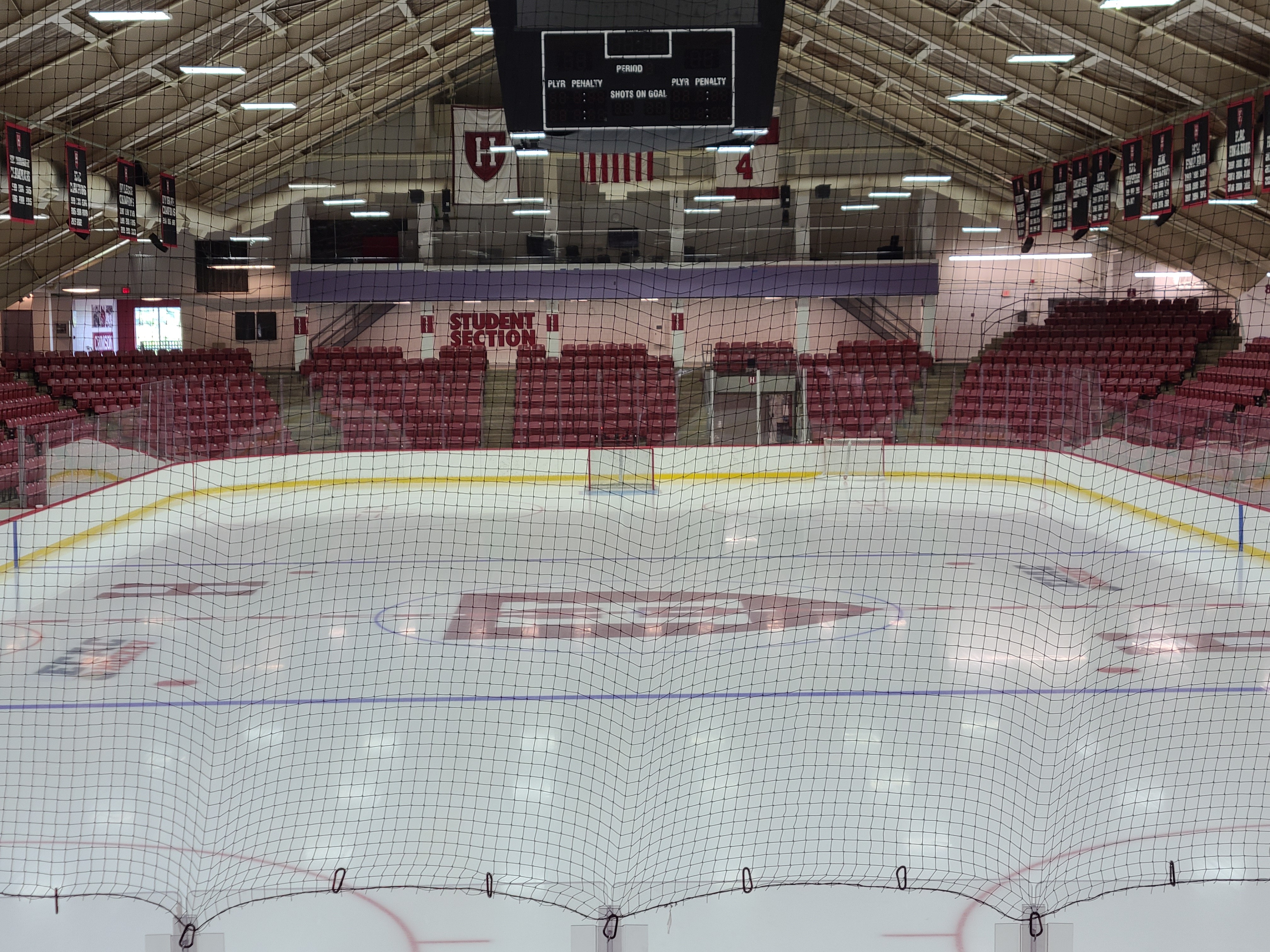
Every winter, thousands of hockey families watch their daughters compete in elite U15 and U18 AA showcases, convinced that a strong stat sheet and a stack of tournament medals will inevitably translate into a college roster spot.
Many families assume the recruiting process operates like a traditional corporate ladder—that if their athlete isn't quite a "full-ride" player, a program will simply offer a partial athletic scholarship to bridge the financial gap.
In Division I women’s hockey, that assumption can lead to costly structural surprises.
Unlike men’s college hockey, or equivalency sports like soccer and tennis, NCAA Division I Women’s Ice Hockey operates under a strict "Headcount" financial framework. Understanding the nuances of this model is the critical first step to protecting your family's athletic investment and finding the right programmatic fit.
The Roster Math of Headcount Sports
In an "Equivalency" sport, coaches receive a pool of maximum funding (e.g., 14 scholarships) and can divide those percentages across a 30-person roster. They can hand out fractional scholarships to build depth.
Division I women’s hockey does not follow this model.
Under NCAA regulations, Division I women’s hockey programs are permitted to fund up to 18 athletic scholarships per team, and these are classified under headcount rules.
The Counter Limit: In headcount sports, any athlete receiving athletic scholarship aid generally counts as a full scholarship counter against the program’s maximum limit. In practice, the vast majority of funded players are treated as full-scholarship athletes.
Beyond the Funded Spots: Players who do not secure one of these funded athletic counters must rely on academic merit awards, institutional grants, external funding, or walk-on opportunities to cover their costs.
Unlike equivalency sports, Division I women's hockey programs generally do not divide athletic aid into traditional partial packages. For most recruits, the economic reality is effectively a full athletic scholarship or no athletic aid at all from that specific program. Furthermore, not every Division I program fully funds all 18 scholarships—actual aid pools depend heavily on individual athletic budget constraints.
Every winter, thousands of hockey families watch their daughters compete in elite U15 and U18 AA showcases, convinced that a strong stat sheet and a stack of tournament medals will inevitably translate into a college roster spot.
Many families assume the recruiting process operates like a traditional corporate ladder—that if their athlete isn't quite a "full-ride" player, a program will simply offer a partial athletic scholarship to bridge the financial gap.
In Division I women’s hockey, that assumption can lead to costly structural surprises.
Unlike men’s college hockey, or equivalency sports like soccer and tennis, NCAA Division I Women’s Ice Hockey operates under a strict "Headcount" financial framework. Understanding the nuances of this model is the critical first step to protecting your family's athletic investment and finding the right programmatic fit.
The Roster Math of Headcount Sports
In an "Equivalency" sport, coaches receive a pool of maximum funding (e.g., 14 scholarships) and can divide those percentages across a 30-person roster. They can hand out fractional scholarships to build depth.
Division I women’s hockey does not follow this model.
Under NCAA regulations, Division I women’s hockey programs are permitted to fund up to 18 athletic scholarships per team, and these are classified under headcount rules.
The Counter Limit: In headcount sports, any athlete receiving athletic scholarship aid generally counts as a full scholarship counter against the program’s maximum limit. In practice, the vast majority of funded players are treated as full-scholarship athletes.
Beyond the Funded Spots: Players who do not secure one of these funded athletic counters must rely on academic merit awards, institutional grants, external funding, or walk-on opportunities to cover their costs.
Unlike equivalency sports, Division I women's hockey programs generally do not divide athletic aid into traditional partial packages. For most recruits, the economic reality is effectively a full athletic scholarship or no athletic aid at all from that specific program. Furthermore, not every Division I program fully funds all 18 scholarships—actual aid pools depend heavily on individual athletic budget constraints.
⚠️ TIMING AND THE RECRUITING WINDOW
Because there are fewer than 40 Division I women’s hockey programs, competition for funded roster spots is exceptionally tight. At an average of 4 to 5 recruits per freshman class, many years see only roughly 150 to 180 true freshman recruiting spots open across the entire Division I landscape.
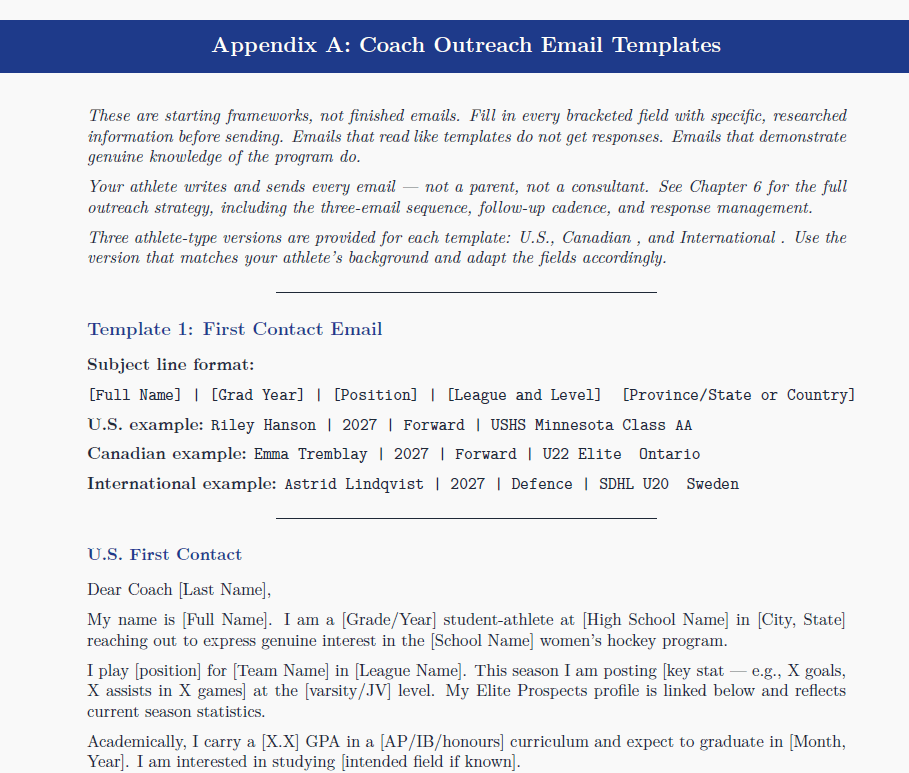
Under current NCAA rules, direct recruiting contact typically begins June 15 following sophomore year. Because available funding is concentrated, elite programs often move aggressively to secure a significant portion of their priority recruits shortly after direct contact rules allow. Entering Junior year without a structured outreach strategy can severely limit your options before the cycle matures.
Managing this timeline requires clear, organized execution.
The Strategic Pivot: Institutional Aid Optimization
If an athlete is on the competitive "bubble" for a funded Division I spot, continuing to exclusively target those programs can result in missed opportunities elsewhere. By the time a family realizes an athletic offer isn't materializing, rosters at alternative programs may already be locked.
This is where sophisticated families utilize an institutional aid strategy at the Division III level.
While NCAA Division III programs do not offer athletic scholarships, many elite institutions—such as NESCAC programs—possess significant academic endowments. By executing a targeted outreach campaign early in the high school career, families can position an athlete to optimize institutional financial aid, merit grants, and academic awards.
The result? The net out-of-pocket cost to attend a prestigious Division III school can often be comparable to—or lower than—the remaining costs at a mid-major Division I school where an athlete is paying out-of-pocket as a non-counter.
Programs respond best to families who approach the process with organization, realism, and preparation.
⚠️ TIMING AND THE RECRUITING WINDOW
Because there are fewer than 40 Division I women’s hockey programs, competition for funded roster spots is exceptionally tight. At an average of 4 to 5 recruits per freshman class, many years see only roughly 150 to 180 true freshman recruiting spots open across the entire Division I landscape.
Under current NCAA rules, direct recruiting contact typically begins June 15 following sophomore year. Because available funding is concentrated, elite programs often move aggressively to secure a significant portion of their priority recruits shortly after direct contact rules allow. Entering Junior year without a structured outreach strategy can severely limit your options before the cycle matures.
Managing this timeline requires clear, organized execution.
The Strategic Pivot: Institutional Aid Optimization
If an athlete is on the competitive "bubble" for a funded Division I spot, continuing to exclusively target those programs can result in missed opportunities elsewhere. By the time a family realizes an athletic offer isn't materializing, rosters at alternative programs may already be locked.
This is where sophisticated families utilize an institutional aid strategy at the Division III level.
While NCAA Division III programs do not offer athletic scholarships, many elite institutions—such as NESCAC programs—possess significant academic endowments. By executing a targeted outreach campaign early in the high school career, families can position an athlete to optimize institutional financial aid, merit grants, and academic awards.
The result? The net out-of-pocket cost to attend a prestigious Division III school can often be comparable to—or lower than—the remaining costs at a mid-major Division I school where an athlete is paying out-of-pocket as a non-counter.
Programs respond best to families who approach the process with organization, realism, and preparation.
The Decision Framework
Families routinely invest $5,000 to $15,000 annually on Tier-1 club fees, showcase entries, skills coaches, and travel logistics. You are already making a significant financial investment in hockey; the goal now is to maximize the long-term return.
For the cost of a single private skating lesson, you can equip your family with a clear, strategic roadmap designed to replace guesswork with data-backed targeting.
WHAT YOU GET TODAY:
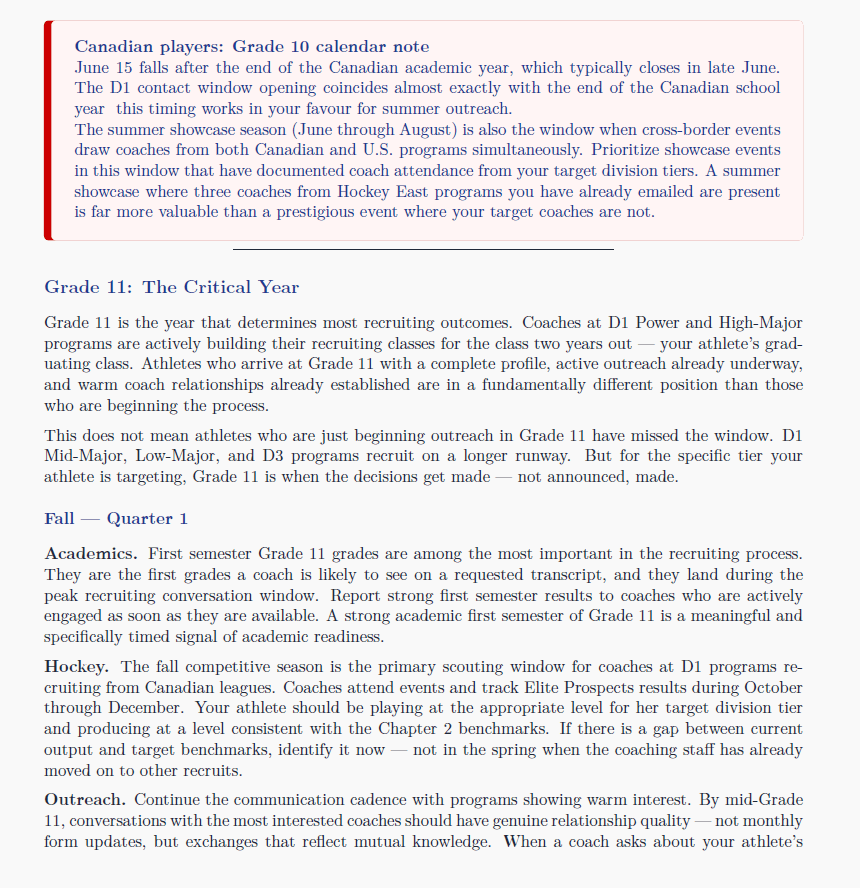
The Women’s Hockey Scholarship Playbook (PDF): A comprehensive operational guide covering the modern recruiting timeline, roster-depth analysis, the June 15 protocol, and the professional communication frameworks college coaches expect.
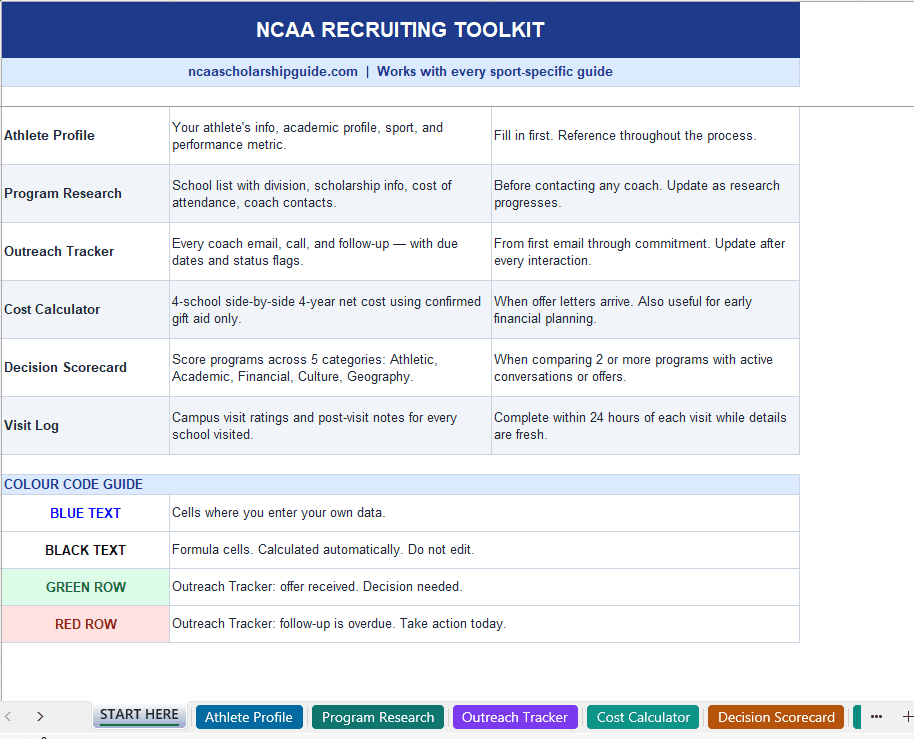
The NCAA Recruiting Toolkit (Excel): Your interactive digital workbook to track coach outreach, organize program data, and accurately calculate net costs across multiple divisions.
THE RISK REVERSAL GUARANTEE: Evaluate the Playbook and Toolkit for 30 days. If you do not feel significantly more informed, organized, and prepared to run a structured coach outreach campaign, simply email us for a 100% refund. You keep the Excel Toolkit. We take the risk because we know these tools provide immediate structural clarity.
The Decision Framework
Families routinely invest $5,000 to $15,000 annually on Tier-1 club fees, showcase entries, skills coaches, and travel logistics. You are already making a significant financial investment in hockey; the goal now is to maximize the long-term return.
For the cost of a single private skating lesson, you can equip your family with a clear, strategic roadmap designed to replace guesswork with data-backed targeting.
WHAT YOU GET TODAY:
The Women’s Hockey Scholarship Playbook (PDF): A comprehensive operational guide covering the modern recruiting timeline, roster-depth analysis, the June 15 protocol, and the professional communication frameworks college coaches expect.
The NCAA Recruiting Toolkit (Excel): Your interactive digital workbook to track coach outreach, organize program data, and accurately calculate net costs across multiple divisions.
THE RISK REVERSAL GUARANTEE: Evaluate the Playbook and Toolkit for 30 days. If you do not feel significantly more informed, organized, and prepared to run a structured coach outreach campaign, simply email us for a 100% refund. You keep the Excel Toolkit. We take the risk because we know these tools provide immediate structural clarity.
It's not the most talented kids who get scholarships.
It's the ones with the right plan.
Our playbooks break down timelines, outreach,
and scholarship realities - by sport.
It's not the most talented kids who get scholarships.
It's the ones with the right plan.
Our playbooks break down timelines, outreach,
and scholarship realities - by sport.