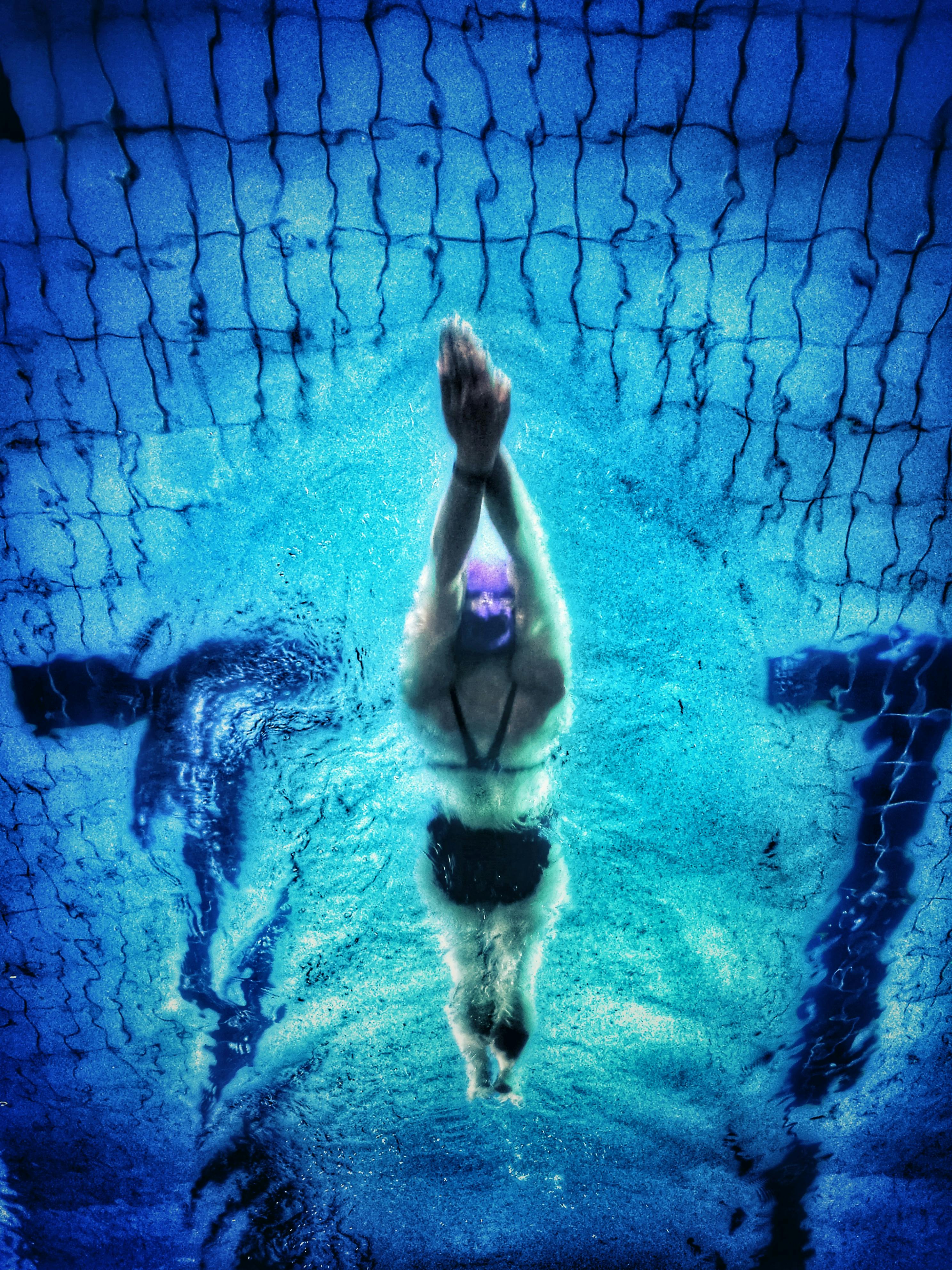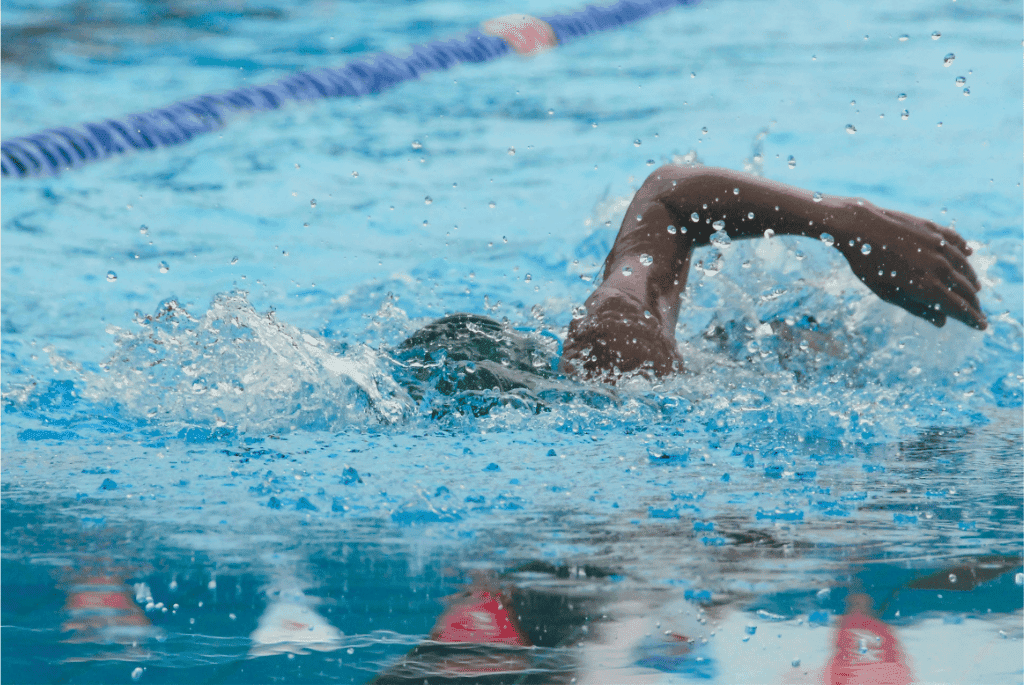
Two swimmers post similar times.
One gets Division I recruiting interest. The other doesn’t.
The difference usually isn’t talent. It’s event specialization, relay value, roster needs, and how scholarships are actually allocated behind the scenes at NCAA swim and dive programs.
This resource reflects current NCAA scholarship rules and recruiting practices used across Division I, II, III, and NAIA programs. It breaks down how swimming and diving scholarships actually work by event (sprint, mid-distance, distance, and diving), division, and roster limits, so families can build a realistic, event-specific recruiting strategy instead of guessing.
Start here:
Before diving in, skim our Swimming and Diving Resource page for equivalency basics.
Then use the Swimming & Diving Scholarship Playbook for timelines, scripts, and event-based strategy.
How Do Swimming & Diving Scholarships Work?
Swimming and diving scholarships are typically partial and are awarded based on event specialization, relay value, roster needs, and academic qualifications.
Most NCAA programs operate under equivalency rules, meaning coaches divide a limited scholarship pool across the roster rather than offering full athletic scholarships to most athletes.
Section 1: NCAA Swimming & Diving Scholarships
1.1 Scholarship & Roster Limits (Updated for 2025–26)
Division | Men’s Scholarships | Women’s Scholarships | Roster Limit (2025–26) | Notes |
|---|---|---|---|---|
D1 | 9.9 equivalency | 14.0 equivalency | 30 athletes | Both are equivalency sports, partial scholarships dominate |
D2 | 8.1 equivalency | 8.1 equivalency | Varies | Strong academic stacking needed |
D3 | 0 athletic | 0 athletic | Varies | Merit + need-based aid determine affordability |
NAIA | ~8 equivalency | ~8 equivalency | Varies | Flexible, generous stacking rules |
1.2 What “Equivalency” Means in Swim/Dive
Coaches split scholarship dollars across 20–30 swimmers and divers.
Most athletes receive partial awards, not full rides.
Scholarship strategy is shaped by:
relay needs
conference scoring expectations
event depth
academic merit (which stretches scholarship dollars)
New reality:
Roster limits (not scholarship caps) now drive team-building → more partial scholarships, but budgets still determine ceiling amounts.
Section 2: Event Specialization = Scholarship Potential
What Factors Most Affect Swimming & Diving Scholarship Offers?
Scholarship offers in swimming and diving are shaped by four main factors:
• Event specialization (sprint, mid-distance, distance, or diving)
• Relay contribution and scoring potential
• Team roster needs and lineup gaps
• Academic merit, which influences total aid availableAthletes who meet multiple needs, such as scoring events and relays, generally receive stronger and more stable scholarship packages.
Coaches don’t just recruit “fast swimmers.”
They recruit specific event types that fill scoring needs, relay gaps, and roster weaknesses.
2.1 Sprint / Power Events
(50/100 free, 100 fly/back/breast, sprint relays)
Highest demand events for dual-meet scoring.
Teams often recruit 6–10 sprinters.
Strong 100 freestylers who can contribute to relays + good academics = top partials (30–60%).
2.2 Mid-Distance / IM
(200 free, 200 stroke, 200/400 IM)
Essential for conference scoring.
Multi-event athletes have premium value.
Often receive solid packages because versatility covers lineup gaps.
2.3 Distance
(500/1000/1650 free)
Very few lineup spots (2–4 athletes per team).
But true distance specialists are hard to find → top ones command real money.
For most distance specialists outside national-level scorers, scholarship model = partial athletic + strong academic.
Two swimmers post similar times.
One gets Division I recruiting interest. The other doesn’t.
The difference usually isn’t talent. It’s event specialization, relay value, roster needs, and how scholarships are actually allocated behind the scenes at NCAA swim and dive programs.
This resource reflects current NCAA scholarship rules and recruiting practices used across Division I, II, III, and NAIA programs. It breaks down how swimming and diving scholarships actually work by event (sprint, mid-distance, distance, and diving), division, and roster limits, so families can build a realistic, event-specific recruiting strategy instead of guessing.
Start here:
Before diving in, skim our Swimming and Diving Resource page for equivalency basics.
Then use the Swimming & Diving Scholarship Playbook for timelines, scripts, and event-based strategy.
How Do Swimming & Diving Scholarships Work?
Swimming and diving scholarships are typically partial and are awarded based on event specialization, relay value, roster needs, and academic qualifications.
Most NCAA programs operate under equivalency rules, meaning coaches divide a limited scholarship pool across the roster rather than offering full athletic scholarships to most athletes.
Section 1: NCAA Swimming & Diving Scholarships
1.1 Scholarship & Roster Limits (Updated for 2025–26)
Division | Men’s Scholarships | Women’s Scholarships | Roster Limit (2025–26) | Notes |
|---|---|---|---|---|
D1 | 9.9 equivalency | 14.0 equivalency | 30 athletes | Both are equivalency sports, partial scholarships dominate |
D2 | 8.1 equivalency | 8.1 equivalency | Varies | Strong academic stacking needed |
D3 | 0 athletic | 0 athletic | Varies | Merit + need-based aid determine affordability |
NAIA | ~8 equivalency | ~8 equivalency | Varies | Flexible, generous stacking rules |
1.2 What “Equivalency” Means in Swim/Dive
Coaches split scholarship dollars across 20–30 swimmers and divers.
Most athletes receive partial awards, not full rides.
Scholarship strategy is shaped by:
relay needs
conference scoring expectations
event depth
academic merit (which stretches scholarship dollars)
New reality:
Roster limits (not scholarship caps) now drive team-building → more partial scholarships, but budgets still determine ceiling amounts.
Section 2: Event Specialization = Scholarship Potential
What Factors Most Affect Swimming & Diving Scholarship Offers?
Scholarship offers in swimming and diving are shaped by four main factors:
• Event specialization (sprint, mid-distance, distance, or diving)
• Relay contribution and scoring potential
• Team roster needs and lineup gaps
• Academic merit, which influences total aid availableAthletes who meet multiple needs, such as scoring events and relays, generally receive stronger and more stable scholarship packages.
Coaches don’t just recruit “fast swimmers.”
They recruit specific event types that fill scoring needs, relay gaps, and roster weaknesses.
2.1 Sprint / Power Events
(50/100 free, 100 fly/back/breast, sprint relays)
Highest demand events for dual-meet scoring.
Teams often recruit 6–10 sprinters.
Strong 100 freestylers who can contribute to relays + good academics = top partials (30–60%).
2.2 Mid-Distance / IM
(200 free, 200 stroke, 200/400 IM)
Essential for conference scoring.
Multi-event athletes have premium value.
Often receive solid packages because versatility covers lineup gaps.
2.3 Distance
(500/1000/1650 free)
Very few lineup spots (2–4 athletes per team).
But true distance specialists are hard to find → top ones command real money.
For most distance specialists outside national-level scorers, scholarship model = partial athletic + strong academic.
2.4 Diving (1m, 3m, + platform programs)
One of the most under-recruited disciplines nationally.
Many programs lack divers entirely.
Diving shares the same scholarship pool as swimming.
Consistent divers (especially 3m) often receive priority funding.
2.5 Relay Value in Scholarship Decisions
Relay Role | Coach Value | Why It Matters for Aid |
|---|---|---|
Anchor (Sprint Relays) | Very High | Direct conference scoring + dual meet swing |
Top-4 Relay Swimmer | High | Reliable team points, lineup stability |
Alternate / Depth | Medium | Insurance for injuries & taper cycles |
Non-Relay Specialist | Lower | Must score individually or add versatility |
Key takeaway:
Scholars aren’t assigned by event alone. Athletes who reliably contribute to relay depth tend to stay on rosters longer and hold aid more securely.
Learn More: How Fast Do You Need to Be for College Swimming?
Section 3: Scholarship Availability by Event Type
Event Type | D1 Funding Priority | D2 Funding Priority | Key Value | Notes |
|---|---|---|---|---|
Sprint/Relay | High (8–12 athletes) | Medium (6–8) | Relay scoring + dual-meet points | Most consistently funded |
Mid-distance/IM | Medium–High | Medium | Conference scoring | Versatility = higher scholarship value |
Distance | Medium–Low | Low | Nationals scoring potential | Academic stacking essential |
Diving | Medium (2–5 spots) | Low–Medium (1–3) | Rare skillset | Often priority funded due to scarcity |
Section 4: Academic Stacking (The Swim/Dive Advantage)
Swimming and diving are classic stacking sports.
4.1 What Typical Packages Look Like
Athletic % | Academic % | Need-Based % | Total Coverage |
|---|---|---|---|
30% | 40% | 15% | 85% |
20% | 50% | 10% | 80% |
40% | 30% | 10% | 80% |
4.2 Why Academics Matter Even More in Swim/Dive
Partial athletic awards only cover 20–50% of tuition.
High GPA and AP/IB rigor = better merit aid.
Strong academics allow coaches to stretch scholarship dollars, leading to more aggressive recruiting interest.
Related: How to Stack Scholarships
Section 5: What Coaches Look For (By Event)
5.1 Sprinters
Underwater kicks
Turn speed & breakout efficiency
Relay splits under pressure
Consistent 50/100 performance
5.2 Mid-Distance / IM
Stroke versatility
Pace control
Ability to score in 2–3 events
Technical maturity
5.3 Distance
Split consistency
Endurance and volume tolerance
Conference-level 500/1650 potential
Mental toughness
5.4 Divers
Degree of difficulty (DD)
Consistency at 1m + 3m
Platform skills (where applicable)
Championship composure
Versatility Bonus
100/200 free + 100 fly = double scholarship value.
Further Reading: The Ultimate Guide for Parents: Helping Your Swimmer or Diver Earn an NCAA Athletic Scholarship
Section 6: How to Read Rosters for Event Gaps
6.1 Roster Audit Checklist
Look for:
Event group depth (sprint/mid/distance/diving)
Class-year breakdown
Relay core strength (top 8–12 sprint/free/back/breast/fly)
Who’s graduating
Whether the team even has divers
Event overlap (e.g., five IMers but no milers)
2.4 Diving (1m, 3m, + platform programs)
One of the most under-recruited disciplines nationally.
Many programs lack divers entirely.
Diving shares the same scholarship pool as swimming.
Consistent divers (especially 3m) often receive priority funding.
2.5 Relay Value in Scholarship Decisions
Relay Role | Coach Value | Why It Matters for Aid |
|---|---|---|
Anchor (Sprint Relays) | Very High | Direct conference scoring + dual meet swing |
Top-4 Relay Swimmer | High | Reliable team points, lineup stability |
Alternate / Depth | Medium | Insurance for injuries & taper cycles |
Non-Relay Specialist | Lower | Must score individually or add versatility |
Key takeaway:
Scholars aren’t assigned by event alone. Athletes who reliably contribute to relay depth tend to stay on rosters longer and hold aid more securely.
Learn More: How Fast Do You Need to Be for College Swimming?
Section 3: Scholarship Availability by Event Type
Event Type | D1 Funding Priority | D2 Funding Priority | Key Value | Notes |
|---|---|---|---|---|
Sprint/Relay | High (8–12 athletes) | Medium (6–8) | Relay scoring + dual-meet points | Most consistently funded |
Mid-distance/IM | Medium–High | Medium | Conference scoring | Versatility = higher scholarship value |
Distance | Medium–Low | Low | Nationals scoring potential | Academic stacking essential |
Diving | Medium (2–5 spots) | Low–Medium (1–3) | Rare skillset | Often priority funded due to scarcity |
Section 4: Academic Stacking (The Swim/Dive Advantage)
Swimming and diving are classic stacking sports.
4.1 What Typical Packages Look Like
Athletic % | Academic % | Need-Based % | Total Coverage |
|---|---|---|---|
30% | 40% | 15% | 85% |
20% | 50% | 10% | 80% |
40% | 30% | 10% | 80% |
4.2 Why Academics Matter Even More in Swim/Dive
Partial athletic awards only cover 20–50% of tuition.
High GPA and AP/IB rigor = better merit aid.
Strong academics allow coaches to stretch scholarship dollars, leading to more aggressive recruiting interest.
Related: How to Stack Scholarships
Section 5: What Coaches Look For (By Event)
5.1 Sprinters
Underwater kicks
Turn speed & breakout efficiency
Relay splits under pressure
Consistent 50/100 performance
5.2 Mid-Distance / IM
Stroke versatility
Pace control
Ability to score in 2–3 events
Technical maturity
5.3 Distance
Split consistency
Endurance and volume tolerance
Conference-level 500/1650 potential
Mental toughness
5.4 Divers
Degree of difficulty (DD)
Consistency at 1m + 3m
Platform skills (where applicable)
Championship composure
Versatility Bonus
100/200 free + 100 fly = double scholarship value.
Further Reading: The Ultimate Guide for Parents: Helping Your Swimmer or Diver Earn an NCAA Athletic Scholarship
Section 6: How to Read Rosters for Event Gaps
6.1 Roster Audit Checklist
Look for:
Event group depth (sprint/mid/distance/diving)
Class-year breakdown
Relay core strength (top 8–12 sprint/free/back/breast/fly)
Who’s graduating
Whether the team even has divers
Event overlap (e.g., five IMers but no milers)
6.2 Event-Specific Questions for Coaches
Ask:
“Which events need depth over the next two years?”
“How many athletes at my event group receive aid?”
“Do relay-priority swimmers receive higher percentages?”
“What’s the timeline for offers in my event group?”
Deeper Dive: NCAA Campus Visits Explained
Section 7: Build an Event-Smart School List
Match your athlete’s best events to program identity (sprint powerhouse vs distance-heavy).
Use Reach / Match / Safety based on projected scoring value.
Filter aggressively by academic + financial fit before contacting coaches.
Tips: How to Contact NCAA Coaches for the First Time
Section 8: Common Parent Misconceptions
Do All Swimming Events Receive the Same Scholarship Attention?
No. Scholarship opportunities differ significantly by event in college swimming.
Sprint and relay-focused swimmers are often prioritized for funding due to consistent scoring opportunities, while distance swimmers and divers typically have fewer roster spots and rely more heavily on academic and need-based aid.
❌ “All events get equal scholarships.”
→ False. Sprints and relays are often funded more heavily.
❌ “Divers get easy money.”
→ False. It’s niche, but competitive, and inconsistent divers lose offers fast.
❌ “If you don’t sprint, your chances drop.”
→ IM/distance is still vital for conference scoring and depth.
❌ “Swimming scholarships are mostly full rides.”
→ Partials + stacking = the real model in swim/dive.
Find out more: NCAA Scholarship Rules Explained: Headcount vs Equivalency, New Limits, and What Parents Actually Need to Know
Section 9: FAQ
Q: What times typically earn D1 interest?
A: Coaches look for projected conference scoring times, not just raw PRs. Improvement curve matters more than a single time.
Q: How many scholarships exist for divers?
A: Usually 1–3 divers receive athletic money, often drawn from the same pool as swimmers.
Q: Can distance swimmers get strong scholarships?
A: Yes. Top 500/1650 swimmers with strong academics are heavily recruited.
Q: How important is event versatility?
A: One of the biggest scholarship multipliers. Two-event (or IM + relay) contributors get priority.
Q: How do academics affect swimming scholarships?
A: A strong GPA can double your total package and help coaches recruit you more aggressively.
Money Talk: Financial Aid Beyond Athletics: FAFSA, CSS Profile, & Private Scholarships for Recruits
Section 10: Where Families Go Next
Most recruiting mistakes don’t happen because families lack talent. They happen because key steps are skipped or mistimed.
The Swimming & Diving Scholarship Playbook doesn’t promise shortcuts or guarantees. What it does give you is a step-by-step recruiting system so you don’t miss the windows that matter:
✅ A grade-by-grade recruiting timeline (Grade 9–12) so outreach, visits, video, and eligibility aren’t rushed or late
✅ Event-specific guidance for swimmers and divers, including how coaches evaluate relays, versatility, and progression
✅ Coach-ready email templates, follow-up timing, and what to actually include
✅ A breakdown of scholarships, stacking, and negotiation, so offers are compared correctly, not emotionally
✅ Backup paths (D3, NAIA, walk-ons, PG years) if Plan A changes
You can piece together recruiting advice online, but families who get stuck usually miss one critical step at the wrong time.
If you want clarity, structure, and a plan you can follow start to finish, the playbook shows you exactly how to move forward, without guessing or burning opportunities.
6.2 Event-Specific Questions for Coaches
Ask:
“Which events need depth over the next two years?”
“How many athletes at my event group receive aid?”
“Do relay-priority swimmers receive higher percentages?”
“What’s the timeline for offers in my event group?”
Deeper Dive: NCAA Campus Visits Explained
Section 7: Build an Event-Smart School List
Match your athlete’s best events to program identity (sprint powerhouse vs distance-heavy).
Use Reach / Match / Safety based on projected scoring value.
Filter aggressively by academic + financial fit before contacting coaches.
Tips: How to Contact NCAA Coaches for the First Time
Section 8: Common Parent Misconceptions
Do All Swimming Events Receive the Same Scholarship Attention?
No. Scholarship opportunities differ significantly by event in college swimming.
Sprint and relay-focused swimmers are often prioritized for funding due to consistent scoring opportunities, while distance swimmers and divers typically have fewer roster spots and rely more heavily on academic and need-based aid.
❌ “All events get equal scholarships.”
→ False. Sprints and relays are often funded more heavily.
❌ “Divers get easy money.”
→ False. It’s niche, but competitive, and inconsistent divers lose offers fast.
❌ “If you don’t sprint, your chances drop.”
→ IM/distance is still vital for conference scoring and depth.
❌ “Swimming scholarships are mostly full rides.”
→ Partials + stacking = the real model in swim/dive.
Find out more: NCAA Scholarship Rules Explained: Headcount vs Equivalency, New Limits, and What Parents Actually Need to Know
Section 9: FAQ
Q: What times typically earn D1 interest?
A: Coaches look for projected conference scoring times, not just raw PRs. Improvement curve matters more than a single time.
Q: How many scholarships exist for divers?
A: Usually 1–3 divers receive athletic money, often drawn from the same pool as swimmers.
Q: Can distance swimmers get strong scholarships?
A: Yes. Top 500/1650 swimmers with strong academics are heavily recruited.
Q: How important is event versatility?
A: One of the biggest scholarship multipliers. Two-event (or IM + relay) contributors get priority.
Q: How do academics affect swimming scholarships?
A: A strong GPA can double your total package and help coaches recruit you more aggressively.
Money Talk: Financial Aid Beyond Athletics: FAFSA, CSS Profile, & Private Scholarships for Recruits
Section 10: Where Families Go Next
Most recruiting mistakes don’t happen because families lack talent. They happen because key steps are skipped or mistimed.
The Swimming & Diving Scholarship Playbook doesn’t promise shortcuts or guarantees. What it does give you is a step-by-step recruiting system so you don’t miss the windows that matter:
✅ A grade-by-grade recruiting timeline (Grade 9–12) so outreach, visits, video, and eligibility aren’t rushed or late
✅ Event-specific guidance for swimmers and divers, including how coaches evaluate relays, versatility, and progression
✅ Coach-ready email templates, follow-up timing, and what to actually include
✅ A breakdown of scholarships, stacking, and negotiation, so offers are compared correctly, not emotionally
✅ Backup paths (D3, NAIA, walk-ons, PG years) if Plan A changes
You can piece together recruiting advice online, but families who get stuck usually miss one critical step at the wrong time.
If you want clarity, structure, and a plan you can follow start to finish, the playbook shows you exactly how to move forward, without guessing or burning opportunities.
It's not the most talented kids who get scholarships.
It's the ones with the right plan.
Our playbooks break down timelines, outreach,
and scholarship realities - by sport.
It's not the most talented kids who get scholarships.
It's the ones with the right plan.
Our playbooks break down timelines, outreach,
and scholarship realities - by sport.