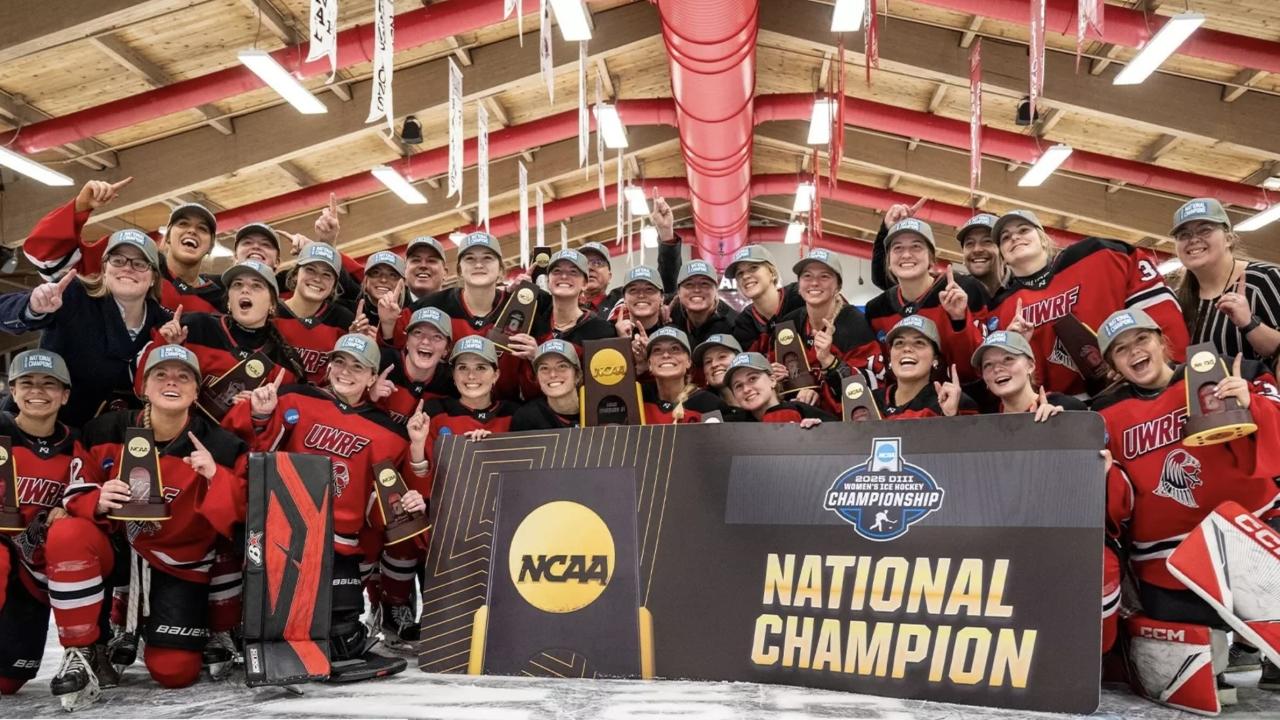
NCAA D3 vs. ACHA Women’s Hockey: The Smarter Choice for Most Families
Most families enter the recruiting process with one goal burned into their thinking:
NCAA Division I or bust.
And that makes sense. D1 carries prestige, visibility, and the perception of scholarships and “making it.” But as players move through U15, U18, and senior hockey, many families quietly realize something uncomfortable:
D1 opportunities are extremely limited
The cost doesn’t always match the promise
And even when a D1 offer appears, it may not actually be the best outcome
Here’s the reality most parents aren’t told clearly enough:
Many of the happiest, most successful women’s hockey players end up in NCAA Division III or high-level ACHA programs.
Not because they “settled” — but because these paths often deliver better academics, better financial outcomes, and more meaningful hockey experiences.
Let’s break it down.
What Is NCAA Division III Women’s Hockey? (It’s Not “Recreational”)
One of the biggest myths in college hockey is that NCAA Division III is a step down in quality.
It isn’t.
At the top end, D3 women’s hockey is fast, structured, and highly competitive. Conferences like NESCAC and MIAC routinely feature players with AAA, prep school, and national-level backgrounds.
In fact, many top D3 programs are comparable in pace and execution to lower-tier D1 rosters — with one major difference:
See the New England Small College Athletic Conference or Minnesota Intercollegiate Athletic Conference for more information.
Lifestyle and ROI Are Better
D1 hockey is effectively a 40-hour-per-week job. Training, lifts, travel, meetings, and competition dominate the calendar.
D3 hockey is still serious varsity athletics — but with:
More academic flexibility
Greater ability to pursue internships and study abroad
Less year-round pressure and burnout
For many players, that balance matters.
The “No Scholarship” Myth in NCAA D3
NCAA Division III schools do not offer athletic scholarships, but many provide substantial academic merit and need-based financial aid. For strong students, these packages often equal or exceed partial Division I athletic scholarships, making D3 women’s hockey one of the most cost-effective college paths.
You’ll often hear this line:
“D3 doesn’t offer scholarships.”
That’s technically true — but deeply misleading.
Here’s the Reality
D3 schools cannot offer athletic scholarships
But they can offer academic merit and need-based financial aid
Many D3 schools are private, well-resourced institutions with very aggressive aid packages
For strong students, those packages frequently equal or exceed what D1 athletic aid would have covered.
Key takeaway:
👉 In D3 hockey, your GPA is your scholarship.
This is why NCAA D3 women’s hockey scholarships are best understood as academic-driven opportunities, not athletic ones.
Link: How financial aid works beyond athletics
What Is ACHA Women’s Hockey? (The Best-Kept Secret)
The American Collegiate Hockey Association (ACHA) governs women’s club hockey in the U.S. — and it’s often misunderstood.
Yes, it’s “club.”
No, that does not mean casual or uncompetitive.
ACHA Division 1 vs Division 2
There is a huge gap between levels.
ACHA D1
Paid coaches
Structured recruiting
Serious travel schedules
Dedicated locker rooms and resources at many schools
Rosters filled with former AAA, prep, and junior players
ACHA D2
More student-run
Less travel
More “pay to play”
Often recreational in nature
When parents talk about ACHA being “not real hockey,” they’re usually thinking of D2 — not ACHA D1.
Is ACHA Women’s Hockey Actually Good?
Yes. At the ACHA Division 1 level, women’s hockey is highly competitive and well-organized. Many programs feature former AAA, prep, and junior players, train year-round, and travel nationally. While it is club hockey, top ACHA D1 teams often operate similarly to varsity programs — without the NCAA athletic scholarship structure.
The Financial Surprise: A Real-World Case Study
This is where most families get blindsided.
Let’s compare two realistic offers.
Offer A: NCAA Division III (Private School)
Tuition: $60,000
Academic Scholarship: $35,000
Need-Based Aid: $15,000
Net Cost to Family: $10,000 per year
Offer B: NCAA Division I (Lower-Tier Program)
Tuition: $40,000
Athletic Scholarship: 25% ($10,000)
Net Cost to Family: $30,000 per year
Over four years, that’s an $80,000 difference — for less ice time.
This is why families who focus only on “athletic money” often miss the bigger picture.
Smart money usually beats athletic money.
Link: Stacking scholarships
NCAA D3 vs ACHA D1: A Side-by-Side Comparison
What’s the Difference Between NCAA D3 and ACHA Women’s Hockey?
The main difference is structure, not quality. NCAA D3 hockey is varsity athletics with coach-led recruiting and institutional financial aid, while ACHA hockey is club-based, often requiring direct outreach and tryouts. Cost, academic flexibility, and time commitment vary significantly between the two paths.
Table 1: Key differences between NCAA Division III and ACHA Division I women’s hockey programs.
Feature | NCAA D3 | ACHA D1 |
|---|---|---|
Recruiting | Highly structured, coach-led | Direct outreach, tryouts common |
Scholarships | Academic & need-based aid | None (occasionally leadership awards) |
Cost | High sticker price, high aid | Lower tuition + player dues ($1–3k) |
Competition | Varsity athletes | Elite former AAA / prep players |
Time Commitment | High | Medium–High |
School Type | Often private, academic | Often large public universities |
How to Get Recruited for D3 and ACHA Women’s Hockey
The strategies are different — and confusing them costs families time.
NCAA D3 Recruiting Strategy
Grades matter first
Send transcripts early
Target academically strong schools
Hockey fit + academic admissibility must align
Link: Recruiting Timeline
ACHA Recruiting Strategy
You usually initiate contact
Email the coach or club president
Attend prospect camps or open tryouts
Apply and gain admission on your own academically
Families who succeed here stop chasing labels and start chasing fit.
Final Takeaway: Stop Chasing Labels. Start Chasing Outcomes.
Most families don’t fail at recruiting.
They just aim at the wrong target for too long.
NCAA Division III and ACHA women’s hockey aren’t backup plans. For many players, they are the smartest path — financially, academically, and athletically.
Link: Main Hockey Resource Page
Ready for Clarity Instead of Guesswork?
The Hockey Recruiting Playbook walks you through:
How D3 and ACHA coaches actually evaluate players
What really drives academic aid and admissions
How to compare offers based on net cost, ice time, and long-term outcomes
If you want confidence — not confusion — this is your roadmap.
NCAA D3 vs. ACHA Women’s Hockey: The Smarter Choice for Most Families
Most families enter the recruiting process with one goal burned into their thinking:
NCAA Division I or bust.
And that makes sense. D1 carries prestige, visibility, and the perception of scholarships and “making it.” But as players move through U15, U18, and senior hockey, many families quietly realize something uncomfortable:
D1 opportunities are extremely limited
The cost doesn’t always match the promise
And even when a D1 offer appears, it may not actually be the best outcome
Here’s the reality most parents aren’t told clearly enough:
Many of the happiest, most successful women’s hockey players end up in NCAA Division III or high-level ACHA programs.
Not because they “settled” — but because these paths often deliver better academics, better financial outcomes, and more meaningful hockey experiences.
Let’s break it down.
What Is NCAA Division III Women’s Hockey? (It’s Not “Recreational”)
One of the biggest myths in college hockey is that NCAA Division III is a step down in quality.
It isn’t.
At the top end, D3 women’s hockey is fast, structured, and highly competitive. Conferences like NESCAC and MIAC routinely feature players with AAA, prep school, and national-level backgrounds.
In fact, many top D3 programs are comparable in pace and execution to lower-tier D1 rosters — with one major difference:
See the New England Small College Athletic Conference or Minnesota Intercollegiate Athletic Conference for more information.
Lifestyle and ROI Are Better
D1 hockey is effectively a 40-hour-per-week job. Training, lifts, travel, meetings, and competition dominate the calendar.
D3 hockey is still serious varsity athletics — but with:
More academic flexibility
Greater ability to pursue internships and study abroad
Less year-round pressure and burnout
For many players, that balance matters.
The “No Scholarship” Myth in NCAA D3
NCAA Division III schools do not offer athletic scholarships, but many provide substantial academic merit and need-based financial aid. For strong students, these packages often equal or exceed partial Division I athletic scholarships, making D3 women’s hockey one of the most cost-effective college paths.
You’ll often hear this line:
“D3 doesn’t offer scholarships.”
That’s technically true — but deeply misleading.
Here’s the Reality
D3 schools cannot offer athletic scholarships
But they can offer academic merit and need-based financial aid
Many D3 schools are private, well-resourced institutions with very aggressive aid packages
For strong students, those packages frequently equal or exceed what D1 athletic aid would have covered.
Key takeaway:
👉 In D3 hockey, your GPA is your scholarship.
This is why NCAA D3 women’s hockey scholarships are best understood as academic-driven opportunities, not athletic ones.
Link: How financial aid works beyond athletics
What Is ACHA Women’s Hockey? (The Best-Kept Secret)
The American Collegiate Hockey Association (ACHA) governs women’s club hockey in the U.S. — and it’s often misunderstood.
Yes, it’s “club.”
No, that does not mean casual or uncompetitive.
ACHA Division 1 vs Division 2
There is a huge gap between levels.
ACHA D1
Paid coaches
Structured recruiting
Serious travel schedules
Dedicated locker rooms and resources at many schools
Rosters filled with former AAA, prep, and junior players
ACHA D2
More student-run
Less travel
More “pay to play”
Often recreational in nature
When parents talk about ACHA being “not real hockey,” they’re usually thinking of D2 — not ACHA D1.
Is ACHA Women’s Hockey Actually Good?
Yes. At the ACHA Division 1 level, women’s hockey is highly competitive and well-organized. Many programs feature former AAA, prep, and junior players, train year-round, and travel nationally. While it is club hockey, top ACHA D1 teams often operate similarly to varsity programs — without the NCAA athletic scholarship structure.
The Financial Surprise: A Real-World Case Study
This is where most families get blindsided.
Let’s compare two realistic offers.
Offer A: NCAA Division III (Private School)
Tuition: $60,000
Academic Scholarship: $35,000
Need-Based Aid: $15,000
Net Cost to Family: $10,000 per year
Offer B: NCAA Division I (Lower-Tier Program)
Tuition: $40,000
Athletic Scholarship: 25% ($10,000)
Net Cost to Family: $30,000 per year
Over four years, that’s an $80,000 difference — for less ice time.
This is why families who focus only on “athletic money” often miss the bigger picture.
Smart money usually beats athletic money.
Link: Stacking scholarships
NCAA D3 vs ACHA D1: A Side-by-Side Comparison
What’s the Difference Between NCAA D3 and ACHA Women’s Hockey?
The main difference is structure, not quality. NCAA D3 hockey is varsity athletics with coach-led recruiting and institutional financial aid, while ACHA hockey is club-based, often requiring direct outreach and tryouts. Cost, academic flexibility, and time commitment vary significantly between the two paths.
Table 1: Key differences between NCAA Division III and ACHA Division I women’s hockey programs.
Feature | NCAA D3 | ACHA D1 |
|---|---|---|
Recruiting | Highly structured, coach-led | Direct outreach, tryouts common |
Scholarships | Academic & need-based aid | None (occasionally leadership awards) |
Cost | High sticker price, high aid | Lower tuition + player dues ($1–3k) |
Competition | Varsity athletes | Elite former AAA / prep players |
Time Commitment | High | Medium–High |
School Type | Often private, academic | Often large public universities |
How to Get Recruited for D3 and ACHA Women’s Hockey
The strategies are different — and confusing them costs families time.
NCAA D3 Recruiting Strategy
Grades matter first
Send transcripts early
Target academically strong schools
Hockey fit + academic admissibility must align
Link: Recruiting Timeline
ACHA Recruiting Strategy
You usually initiate contact
Email the coach or club president
Attend prospect camps or open tryouts
Apply and gain admission on your own academically
Families who succeed here stop chasing labels and start chasing fit.
Final Takeaway: Stop Chasing Labels. Start Chasing Outcomes.
Most families don’t fail at recruiting.
They just aim at the wrong target for too long.
NCAA Division III and ACHA women’s hockey aren’t backup plans. For many players, they are the smartest path — financially, academically, and athletically.
Link: Main Hockey Resource Page
Ready for Clarity Instead of Guesswork?
The Hockey Recruiting Playbook walks you through:
How D3 and ACHA coaches actually evaluate players
What really drives academic aid and admissions
How to compare offers based on net cost, ice time, and long-term outcomes
If you want confidence — not confusion — this is your roadmap.
NCAA D3 vs. ACHA Women’s Hockey: The Smarter Choice for Most Families
Most families enter the recruiting process with one goal burned into their thinking:
NCAA Division I or bust.
And that makes sense. D1 carries prestige, visibility, and the perception of scholarships and “making it.” But as players move through U15, U18, and senior hockey, many families quietly realize something uncomfortable:
D1 opportunities are extremely limited
The cost doesn’t always match the promise
And even when a D1 offer appears, it may not actually be the best outcome
Here’s the reality most parents aren’t told clearly enough:
Many of the happiest, most successful women’s hockey players end up in NCAA Division III or high-level ACHA programs.
Not because they “settled” — but because these paths often deliver better academics, better financial outcomes, and more meaningful hockey experiences.
Let’s break it down.
What Is NCAA Division III Women’s Hockey? (It’s Not “Recreational”)
One of the biggest myths in college hockey is that NCAA Division III is a step down in quality.
It isn’t.
At the top end, D3 women’s hockey is fast, structured, and highly competitive. Conferences like NESCAC and MIAC routinely feature players with AAA, prep school, and national-level backgrounds.
In fact, many top D3 programs are comparable in pace and execution to lower-tier D1 rosters — with one major difference:
See the New England Small College Athletic Conference or Minnesota Intercollegiate Athletic Conference for more information.
Lifestyle and ROI Are Better
D1 hockey is effectively a 40-hour-per-week job. Training, lifts, travel, meetings, and competition dominate the calendar.
D3 hockey is still serious varsity athletics — but with:
More academic flexibility
Greater ability to pursue internships and study abroad
Less year-round pressure and burnout
For many players, that balance matters.
The “No Scholarship” Myth in NCAA D3
NCAA Division III schools do not offer athletic scholarships, but many provide substantial academic merit and need-based financial aid. For strong students, these packages often equal or exceed partial Division I athletic scholarships, making D3 women’s hockey one of the most cost-effective college paths.
You’ll often hear this line:
“D3 doesn’t offer scholarships.”
That’s technically true — but deeply misleading.
Here’s the Reality
D3 schools cannot offer athletic scholarships
But they can offer academic merit and need-based financial aid
Many D3 schools are private, well-resourced institutions with very aggressive aid packages
For strong students, those packages frequently equal or exceed what D1 athletic aid would have covered.
Key takeaway:
👉 In D3 hockey, your GPA is your scholarship.
This is why NCAA D3 women’s hockey scholarships are best understood as academic-driven opportunities, not athletic ones.
Link: How financial aid works beyond athletics
What Is ACHA Women’s Hockey? (The Best-Kept Secret)
The American Collegiate Hockey Association (ACHA) governs women’s club hockey in the U.S. — and it’s often misunderstood.
Yes, it’s “club.”
No, that does not mean casual or uncompetitive.
ACHA Division 1 vs Division 2
There is a huge gap between levels.
ACHA D1
Paid coaches
Structured recruiting
Serious travel schedules
Dedicated locker rooms and resources at many schools
Rosters filled with former AAA, prep, and junior players
ACHA D2
More student-run
Less travel
More “pay to play”
Often recreational in nature
When parents talk about ACHA being “not real hockey,” they’re usually thinking of D2 — not ACHA D1.
Is ACHA Women’s Hockey Actually Good?
Yes. At the ACHA Division 1 level, women’s hockey is highly competitive and well-organized. Many programs feature former AAA, prep, and junior players, train year-round, and travel nationally. While it is club hockey, top ACHA D1 teams often operate similarly to varsity programs — without the NCAA athletic scholarship structure.
The Financial Surprise: A Real-World Case Study
This is where most families get blindsided.
Let’s compare two realistic offers.
Offer A: NCAA Division III (Private School)
Tuition: $60,000
Academic Scholarship: $35,000
Need-Based Aid: $15,000
Net Cost to Family: $10,000 per year
Offer B: NCAA Division I (Lower-Tier Program)
Tuition: $40,000
Athletic Scholarship: 25% ($10,000)
Net Cost to Family: $30,000 per year
Over four years, that’s an $80,000 difference — for less ice time.
This is why families who focus only on “athletic money” often miss the bigger picture.
Smart money usually beats athletic money.
Link: Stacking scholarships
NCAA D3 vs ACHA D1: A Side-by-Side Comparison
What’s the Difference Between NCAA D3 and ACHA Women’s Hockey?
The main difference is structure, not quality. NCAA D3 hockey is varsity athletics with coach-led recruiting and institutional financial aid, while ACHA hockey is club-based, often requiring direct outreach and tryouts. Cost, academic flexibility, and time commitment vary significantly between the two paths.
Table 1: Key differences between NCAA Division III and ACHA Division I women’s hockey programs.
Feature | NCAA D3 | ACHA D1 |
|---|---|---|
Recruiting | Highly structured, coach-led | Direct outreach, tryouts common |
Scholarships | Academic & need-based aid | None (occasionally leadership awards) |
Cost | High sticker price, high aid | Lower tuition + player dues ($1–3k) |
Competition | Varsity athletes | Elite former AAA / prep players |
Time Commitment | High | Medium–High |
School Type | Often private, academic | Often large public universities |
How to Get Recruited for D3 and ACHA Women’s Hockey
The strategies are different — and confusing them costs families time.
NCAA D3 Recruiting Strategy
Grades matter first
Send transcripts early
Target academically strong schools
Hockey fit + academic admissibility must align
Link: Recruiting Timeline
ACHA Recruiting Strategy
You usually initiate contact
Email the coach or club president
Attend prospect camps or open tryouts
Apply and gain admission on your own academically
Families who succeed here stop chasing labels and start chasing fit.
Final Takeaway: Stop Chasing Labels. Start Chasing Outcomes.
Most families don’t fail at recruiting.
They just aim at the wrong target for too long.
NCAA Division III and ACHA women’s hockey aren’t backup plans. For many players, they are the smartest path — financially, academically, and athletically.
Link: Main Hockey Resource Page
Ready for Clarity Instead of Guesswork?
The Hockey Recruiting Playbook walks you through:
How D3 and ACHA coaches actually evaluate players
What really drives academic aid and admissions
How to compare offers based on net cost, ice time, and long-term outcomes
If you want confidence — not confusion — this is your roadmap.
