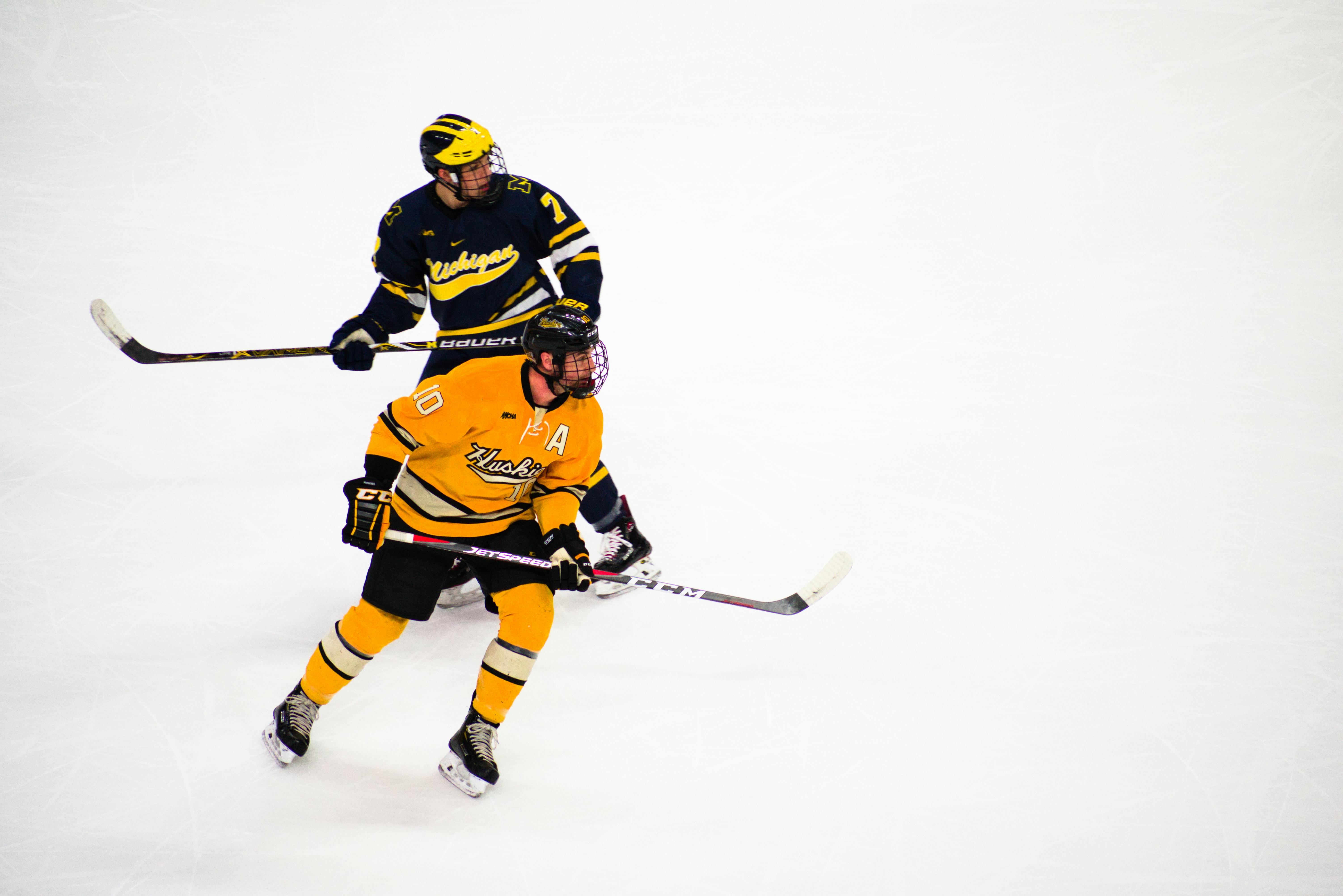
In November 2024, the NCAA voted to let Canadian Hockey League players into Division I hockey for the first time ever, effective August 1, 2025. It's the biggest rule change in men's college hockey in decades, and most families have heard some version of it by now. What most families haven't heard: ACHA made the same change too, voting at its 2025 Annual Meeting to allow CHL players, explicitly mirroring the NCAA's new policy. Two of the three major college hockey pathways opened their doors to major junior alumni in the same year.
D3 hasn't formally followed, at least not yet. As of this writing, the NCAA has not adopted a Division III rule mirroring the D1 change, and current guidance from College Hockey Inc. and other NCAA-facing sources still describes CHL participation as disqualifying for D3 eligibility under the standard framework. There's a real wrinkle worth knowing about, though: reporting from December 2025 described a group of D3 coaches and administrators actively discussing ways to accept former CHL players starting with the 2026-27 season. That's genuine movement, but it's institution-level discussion, not a codified NCAA-wide rule, and multiple sources are explicit that no formal D3 legislative change had been adopted as of mid-2026.
If your son has any CHL history, or you're weighing whether it's worth the risk, that gap between "some programs are talking about it" and "the rule actually changed" is exactly the kind of fine print that's easy to miss when the headlines all just say "CHL players can now play college hockey."
(For the broader picture on how AAA and junior hockey actually connect to NCAA recruiting, see our AAA Hockey, No Offers: The Real Reason Why guide.)
Why D1 and ACHA Changed, and D3 Hasn't, Yet
The D1 rule change wasn't a broad NCAA policy shift, it was a Division I Council decision, made under real legal pressure. A proposed class-action antitrust lawsuit, filed in August 2024, argued that barring CHL players amounted to an illegal group boycott that suppressed player compensation and competition. The NCAA had already flagged this exact legal vulnerability in a 2023 policy review. The Division I Council's vote came about three months after the lawsuit was filed.
That lawsuit, and the resulting vote, applied specifically to Division I. Division III operates with real legislative autonomy inside the NCAA, it doesn't automatically adopt D1's rule changes, and as of this writing it hasn't formally adopted this one, the reported 2025-26 D3-level discussions notwithstanding. Multiple current sources covering the rule, including a source specifically summarizing what the rule change does and doesn't cover as of mid-2026, say the same thing: the eligibility change applies to Division I only, CHL players are still not eligible for Division III under the standard NCAA framework.
ACHA is a different story entirely, it isn't part of the NCAA at all, it's a separate, non-varsity collegiate hockey association. Its decision to allow CHL players wasn't required by the NCAA's ruling, ACHA made an independent choice to follow suit. That's genuinely good news for a CHL alum who wants to keep playing organized college hockey outside the D1 track. It doesn't change D3's current status, but it's worth remembering D3 itself is showing real signs of movement, just not a finished rule change yet.
In November 2024, the NCAA voted to let Canadian Hockey League players into Division I hockey for the first time ever, effective August 1, 2025. It's the biggest rule change in men's college hockey in decades, and most families have heard some version of it by now. What most families haven't heard: ACHA made the same change too, voting at its 2025 Annual Meeting to allow CHL players, explicitly mirroring the NCAA's new policy. Two of the three major college hockey pathways opened their doors to major junior alumni in the same year.
D3 hasn't formally followed, at least not yet. As of this writing, the NCAA has not adopted a Division III rule mirroring the D1 change, and current guidance from College Hockey Inc. and other NCAA-facing sources still describes CHL participation as disqualifying for D3 eligibility under the standard framework. There's a real wrinkle worth knowing about, though: reporting from December 2025 described a group of D3 coaches and administrators actively discussing ways to accept former CHL players starting with the 2026-27 season. That's genuine movement, but it's institution-level discussion, not a codified NCAA-wide rule, and multiple sources are explicit that no formal D3 legislative change had been adopted as of mid-2026.
If your son has any CHL history, or you're weighing whether it's worth the risk, that gap between "some programs are talking about it" and "the rule actually changed" is exactly the kind of fine print that's easy to miss when the headlines all just say "CHL players can now play college hockey."
(For the broader picture on how AAA and junior hockey actually connect to NCAA recruiting, see our AAA Hockey, No Offers: The Real Reason Why guide.)
Why D1 and ACHA Changed, and D3 Hasn't, Yet
The D1 rule change wasn't a broad NCAA policy shift, it was a Division I Council decision, made under real legal pressure. A proposed class-action antitrust lawsuit, filed in August 2024, argued that barring CHL players amounted to an illegal group boycott that suppressed player compensation and competition. The NCAA had already flagged this exact legal vulnerability in a 2023 policy review. The Division I Council's vote came about three months after the lawsuit was filed.
That lawsuit, and the resulting vote, applied specifically to Division I. Division III operates with real legislative autonomy inside the NCAA, it doesn't automatically adopt D1's rule changes, and as of this writing it hasn't formally adopted this one, the reported 2025-26 D3-level discussions notwithstanding. Multiple current sources covering the rule, including a source specifically summarizing what the rule change does and doesn't cover as of mid-2026, say the same thing: the eligibility change applies to Division I only, CHL players are still not eligible for Division III under the standard NCAA framework.
ACHA is a different story entirely, it isn't part of the NCAA at all, it's a separate, non-varsity collegiate hockey association. Its decision to allow CHL players wasn't required by the NCAA's ruling, ACHA made an independent choice to follow suit. That's genuinely good news for a CHL alum who wants to keep playing organized college hockey outside the D1 track. It doesn't change D3's current status, but it's worth remembering D3 itself is showing real signs of movement, just not a finished rule change yet.
Why This Matters More Than It Used To
D3's uncertain status isn't just a technical footnote, it's become more consequential precisely because D1 opened up. The scale of the D1 shift has been real and fast: College Hockey Inc.'s own commitment tracker counted 297 CHL players committed to D1 programs as of April 9, 2026, about 38% of the D1 commitments in that tracker at that time, according to the Star Tribune. Over the same period, the Star Tribune reported that US-born players on D1 rosters fell by 147 between the 2024-25 and 2025-26 seasons, while Canadian players increased by 97. Minnesota, historically the top state for producing D1 players, reportedly saw its D1 player count drop by 27 between those same two seasons.
These figures show a major, fast shift in the D1 recruiting market. They don't prove that every CHL commitment displaced a specific American recruit, but they do mean pre-2025 assumptions about D1 roster availability are no longer a safe baseline. Junior-hockey analysts and league representatives, including public commentary from the NAHL about the rule change, have described real concern about roster spots becoming more limited throughout the pipeline as displaced players look for landing spots at lower levels. That's a market forecast worth taking seriously, not a precisely measured accounting of where every player ends up, but it's part of why D3's current status matters more now than it would have before 2025.
One more thing worth knowing if D2 is part of your plan: NCAA men's ice hockey doesn't have a real Division II pathway the way D1 and D3 do. The Northeast-10 Conference is essentially the only conference still fielding D2 men's hockey, and there's no separate D2 national championship structure. Don't treat "D2 hockey" as a broad backup option comparable to D1 or D3, confirm directly with any specific program whether it even fields a meaningful D2 hockey pathway.
What This Actually Means for Different Families
If your son is still weighing whether to pursue major junior hockey, understand that choice currently creates real uncertainty around D3 specifically, while leaving D1 and ACHA open under their respective conditions. That's a genuinely different trade-off than it was before 2025, when CHL participation closed every NCAA door at once, and it's one worth revisiting again for the 2026-27 season given the reported D3-level discussions.
If your son already played CHL and D1 isn't panning out, don't assume D3 is quietly available as a fallback the way it might be for almost any other recruit in almost any other situation. Under the current published NCAA framework, it isn't, though that could change. Confirm his specific situation directly with a target program's compliance office or the NCAA Eligibility Center before ruling anything in or out. ACHA and U Sports back in Canada are more reliably real options right now if D3 doesn't pan out.
If your son is coming up through AAA or US junior hockey and CHL isn't part of the picture, none of this changes his situation, this is specifically about the CHL-to-D3 gap, not a broader statement about D3 eligibility generally.
Frequently Asked Questions
Does this rule change apply to D2 hockey too? The rule change is specific to Division I, and men's college hockey doesn't have a broad D2 pathway to begin with, only a handful of programs, mostly in the Northeast-10 Conference, field it. If D2 hockey matters to your specific recruiting plan, confirm directly with the target program rather than assuming any general rule applies.
Can a CHL player attend camps or tryouts without risking D3 eligibility? Don't assume any specific camp, tryout, or training stint was harmless. The D1 and ACHA exceptions use a specific "actual and necessary expenses" compensation standard, but that standard hasn't been formally extended to D3. Whether a specific situation creates a problem depends on the exact dates, games, contracts, and payments involved, get a written eligibility determination from the NCAA Eligibility Center rather than assuming based on this post or any general description.
Is ACHA a real substitute for D3 hockey? It's a genuinely different thing, not a substitute. ACHA is not part of the NCAA, it operates as a separate, non-varsity collegiate hockey association, and it doesn't offer NCAA athletic scholarships, though a university may still offer a CHL alum separate academic, need-based, or institutional aid outside of athletics. For a CHL alum who wants organized, competitive college hockey outside the D1 track, it's a real and available option, just not an equivalent one to D3 varsity competition.
Why This Matters More Than It Used To
D3's uncertain status isn't just a technical footnote, it's become more consequential precisely because D1 opened up. The scale of the D1 shift has been real and fast: College Hockey Inc.'s own commitment tracker counted 297 CHL players committed to D1 programs as of April 9, 2026, about 38% of the D1 commitments in that tracker at that time, according to the Star Tribune. Over the same period, the Star Tribune reported that US-born players on D1 rosters fell by 147 between the 2024-25 and 2025-26 seasons, while Canadian players increased by 97. Minnesota, historically the top state for producing D1 players, reportedly saw its D1 player count drop by 27 between those same two seasons.
These figures show a major, fast shift in the D1 recruiting market. They don't prove that every CHL commitment displaced a specific American recruit, but they do mean pre-2025 assumptions about D1 roster availability are no longer a safe baseline. Junior-hockey analysts and league representatives, including public commentary from the NAHL about the rule change, have described real concern about roster spots becoming more limited throughout the pipeline as displaced players look for landing spots at lower levels. That's a market forecast worth taking seriously, not a precisely measured accounting of where every player ends up, but it's part of why D3's current status matters more now than it would have before 2025.
One more thing worth knowing if D2 is part of your plan: NCAA men's ice hockey doesn't have a real Division II pathway the way D1 and D3 do. The Northeast-10 Conference is essentially the only conference still fielding D2 men's hockey, and there's no separate D2 national championship structure. Don't treat "D2 hockey" as a broad backup option comparable to D1 or D3, confirm directly with any specific program whether it even fields a meaningful D2 hockey pathway.
What This Actually Means for Different Families
If your son is still weighing whether to pursue major junior hockey, understand that choice currently creates real uncertainty around D3 specifically, while leaving D1 and ACHA open under their respective conditions. That's a genuinely different trade-off than it was before 2025, when CHL participation closed every NCAA door at once, and it's one worth revisiting again for the 2026-27 season given the reported D3-level discussions.
If your son already played CHL and D1 isn't panning out, don't assume D3 is quietly available as a fallback the way it might be for almost any other recruit in almost any other situation. Under the current published NCAA framework, it isn't, though that could change. Confirm his specific situation directly with a target program's compliance office or the NCAA Eligibility Center before ruling anything in or out. ACHA and U Sports back in Canada are more reliably real options right now if D3 doesn't pan out.
If your son is coming up through AAA or US junior hockey and CHL isn't part of the picture, none of this changes his situation, this is specifically about the CHL-to-D3 gap, not a broader statement about D3 eligibility generally.
Frequently Asked Questions
Does this rule change apply to D2 hockey too? The rule change is specific to Division I, and men's college hockey doesn't have a broad D2 pathway to begin with, only a handful of programs, mostly in the Northeast-10 Conference, field it. If D2 hockey matters to your specific recruiting plan, confirm directly with the target program rather than assuming any general rule applies.
Can a CHL player attend camps or tryouts without risking D3 eligibility? Don't assume any specific camp, tryout, or training stint was harmless. The D1 and ACHA exceptions use a specific "actual and necessary expenses" compensation standard, but that standard hasn't been formally extended to D3. Whether a specific situation creates a problem depends on the exact dates, games, contracts, and payments involved, get a written eligibility determination from the NCAA Eligibility Center rather than assuming based on this post or any general description.
Is ACHA a real substitute for D3 hockey? It's a genuinely different thing, not a substitute. ACHA is not part of the NCAA, it operates as a separate, non-varsity collegiate hockey association, and it doesn't offer NCAA athletic scholarships, though a university may still offer a CHL alum separate academic, need-based, or institutional aid outside of athletics. For a CHL alum who wants organized, competitive college hockey outside the D1 track, it's a real and available option, just not an equivalent one to D3 varsity competition.
Common Mistakes Parents Make With the CHL Rule Change
Assuming "the CHL rule changed" means it changed everywhere. It changed for D1, and ACHA separately made its own independent decision to follow suit. D3 hasn't formally adopted a matching rule, even though some D3 programs are reportedly discussing it for 2026-27.
Treating any CHL involvement as automatically safe now. The D1 and ACHA carve-outs are specific and conditional. Neither has been formally extended to D3. Confirm your son's exact situation with the NCAA Eligibility Center directly rather than assuming.
Not accounting for D1's new crowding when planning a fallback. With CHL talent now filling a real share of D1 rosters, a player who doesn't land a D1 spot is competing for fewer open spots below D1 than before, which makes D3's uncertain CHL status matter more than it used to.
Confusing ACHA's new openness with a D3-equivalent option. ACHA is real and newly available to CHL alumni, but it's a different structure entirely, not a stand-in for NCAA D3 varsity hockey.
Assuming reported D3 discussions mean the rule has already changed. As of mid-2026, multiple sources confirm no NCAA-wide D3 rule change has been formally adopted. Treat 2026-27 as a season to watch, not a settled outcome.
The Real Answer
The 2025 rule change was genuinely historic, but it wasn't the blanket fix a lot of headlines made it sound like. D1 opened to CHL players. ACHA independently followed. D3 hasn't formally matched either move, though there's real, reported movement among some D3 programs toward accepting CHL players starting in 2026-27, worth watching rather than ignoring or assuming. If a CHL path is even a possibility for your son, build your family's plan around what's actually confirmed open right now, D1 and ACHA, get a written eligibility determination for anything involving D3, and don't assume either way based on what you read in a headline.
Sources
ESPN, "NCAA makes Canadian Hockey League players eligible for Div. I" (confirms the rule change, its effective date, and that it does not apply to D3; cites NCAA Bylaw 12.2.3.2 directly): https://www.espn.com/college-sports/story/_/id/42254200/ncaa-makes-canadian-hockey-league-players-eligible-div-i
NHL.com, "CHL players to be eligible to play NCAA hockey beginning in 2025-26": https://www.nhl.com/news/chl-players-to-be-eligible-to-play-ncaa-hockey-beginning-in-2025-26
College Hockey Inc., "NCAA DI Council Votes to Make CHL Players Eligible" and official FAQ (confirms D1-only scope and the "actual and necessary expenses" standard): https://www.collegehockeyinc.com/2024/11/breaking-ncaa-di-council-votes-to-make-chl-players-eligible/
American Collegiate Hockey Association, "ACHA to Allow CHL Players: Highlights 2025 ACHA Annual Meeting" (confirms ACHA's independent, parallel decision): https://www.achahockey.org/acha-to-allow-chl-players-highlights-2025-acha-annual-meeting
Star Tribune, "CHL rule impacts NCAA men's and junior hockey rosters for Minnesota players" (2026 commitment data: 297 CHL players committed to D1 as of April 9, 2026, roster nationality shifts, Minnesota-specific impact): https://varsity.startribune.com/chl-rule-impacts-ncaa-mens-and-junior-hockey-rosters-for-minnesota-players/601659464
The Junior Hockey News / Mark the Hockey Resource, "NCAA DIII Hockey Programs Move to Accept Former CHL Players Starting in 2026" (December 2025 reporting on D3-level discussions, explicitly noting no NCAA-wide D3 rule change had been formally adopted): https://thejuniorhockeynews.com/ncaa-diii-hockey-programs-move-to-accept-former-chl-players-starting-in-2026/
HC Sports Management, "USHL vs. NAHL vs. BCHL vs. CHL: Which Junior League Is Right for Your Player?" (current, mid-2026 confirmation that the eligibility change remains D1-only and D3 players remain ineligible): https://hcsportsmanagement.com/junior-hockey-leagues/
MyHockeyRankings, "NAHL Pushes Forward With Annual Draft Despite Continued Changes to College & Junior Hockey" (current data and industry commentary on roster displacement effects through the hockey pipeline): https://myhockeyrankings.com/news?b=4443
Phelps Law, "NCAA Permits Certain Junior and Pro Hockey Players to Maintain Their Eligibility" (legal background on the antitrust lawsuit and NCAA policy review): https://www.phelps.com/insights/ncaa-permits-certain-junior-and-pro-hockey-players-to-maintain-their-eligibility.html
Common Mistakes Parents Make With the CHL Rule Change
Assuming "the CHL rule changed" means it changed everywhere. It changed for D1, and ACHA separately made its own independent decision to follow suit. D3 hasn't formally adopted a matching rule, even though some D3 programs are reportedly discussing it for 2026-27.
Treating any CHL involvement as automatically safe now. The D1 and ACHA carve-outs are specific and conditional. Neither has been formally extended to D3. Confirm your son's exact situation with the NCAA Eligibility Center directly rather than assuming.
Not accounting for D1's new crowding when planning a fallback. With CHL talent now filling a real share of D1 rosters, a player who doesn't land a D1 spot is competing for fewer open spots below D1 than before, which makes D3's uncertain CHL status matter more than it used to.
Confusing ACHA's new openness with a D3-equivalent option. ACHA is real and newly available to CHL alumni, but it's a different structure entirely, not a stand-in for NCAA D3 varsity hockey.
Assuming reported D3 discussions mean the rule has already changed. As of mid-2026, multiple sources confirm no NCAA-wide D3 rule change has been formally adopted. Treat 2026-27 as a season to watch, not a settled outcome.
The Real Answer
The 2025 rule change was genuinely historic, but it wasn't the blanket fix a lot of headlines made it sound like. D1 opened to CHL players. ACHA independently followed. D3 hasn't formally matched either move, though there's real, reported movement among some D3 programs toward accepting CHL players starting in 2026-27, worth watching rather than ignoring or assuming. If a CHL path is even a possibility for your son, build your family's plan around what's actually confirmed open right now, D1 and ACHA, get a written eligibility determination for anything involving D3, and don't assume either way based on what you read in a headline.
Sources
ESPN, "NCAA makes Canadian Hockey League players eligible for Div. I" (confirms the rule change, its effective date, and that it does not apply to D3; cites NCAA Bylaw 12.2.3.2 directly): https://www.espn.com/college-sports/story/_/id/42254200/ncaa-makes-canadian-hockey-league-players-eligible-div-i
NHL.com, "CHL players to be eligible to play NCAA hockey beginning in 2025-26": https://www.nhl.com/news/chl-players-to-be-eligible-to-play-ncaa-hockey-beginning-in-2025-26
College Hockey Inc., "NCAA DI Council Votes to Make CHL Players Eligible" and official FAQ (confirms D1-only scope and the "actual and necessary expenses" standard): https://www.collegehockeyinc.com/2024/11/breaking-ncaa-di-council-votes-to-make-chl-players-eligible/
American Collegiate Hockey Association, "ACHA to Allow CHL Players: Highlights 2025 ACHA Annual Meeting" (confirms ACHA's independent, parallel decision): https://www.achahockey.org/acha-to-allow-chl-players-highlights-2025-acha-annual-meeting
Star Tribune, "CHL rule impacts NCAA men's and junior hockey rosters for Minnesota players" (2026 commitment data: 297 CHL players committed to D1 as of April 9, 2026, roster nationality shifts, Minnesota-specific impact): https://varsity.startribune.com/chl-rule-impacts-ncaa-mens-and-junior-hockey-rosters-for-minnesota-players/601659464
The Junior Hockey News / Mark the Hockey Resource, "NCAA DIII Hockey Programs Move to Accept Former CHL Players Starting in 2026" (December 2025 reporting on D3-level discussions, explicitly noting no NCAA-wide D3 rule change had been formally adopted): https://thejuniorhockeynews.com/ncaa-diii-hockey-programs-move-to-accept-former-chl-players-starting-in-2026/
HC Sports Management, "USHL vs. NAHL vs. BCHL vs. CHL: Which Junior League Is Right for Your Player?" (current, mid-2026 confirmation that the eligibility change remains D1-only and D3 players remain ineligible): https://hcsportsmanagement.com/junior-hockey-leagues/
MyHockeyRankings, "NAHL Pushes Forward With Annual Draft Despite Continued Changes to College & Junior Hockey" (current data and industry commentary on roster displacement effects through the hockey pipeline): https://myhockeyrankings.com/news?b=4443
Phelps Law, "NCAA Permits Certain Junior and Pro Hockey Players to Maintain Their Eligibility" (legal background on the antitrust lawsuit and NCAA policy review): https://www.phelps.com/insights/ncaa-permits-certain-junior-and-pro-hockey-players-to-maintain-their-eligibility.html
It's not the most talented kids who get scholarships.
It's the ones with the right plan.
Our playbooks break down timelines, outreach,
and scholarship realities - by sport.
It's not the most talented kids who get scholarships.
It's the ones with the right plan.
Our playbooks break down timelines, outreach,
and scholarship realities - by sport.